You Won’t Believe What I Found in Brunei’s Hidden Mosque
I never expected Bandar Seri Begawan to hit me this hard. Sure, it’s small, but the city’s quiet charm and golden-domed wonders stopped me in my tracks. Walking through the Islamic Architectural Park, I felt like I’d stepped into a dream — marble glinting under tropical sun, silence broken only by distant calls to prayer. This isn’t just a stopover; it’s a visual masterpiece. If you’re chasing real, soul-stirring beauty, you have to see this for yourself.
First Impressions: A Capital That Defies Expectations
Arriving in Bandar Seri Begawan, one might expect the usual bustle of a Southeast Asian capital — honking scooters, crowded sidewalks, the scent of street food mingling with exhaust fumes. Instead, what greets visitors is a serene, tree-lined city where traffic flows calmly and the air carries the fragrance of frangipani and rain-soaked earth. There are no towering skyscrapers or neon billboards here. Instead, the skyline is punctuated by soft curves of golden domes and slender minarets that rise like quiet sentinels above lush greenery. This is a capital that refuses to shout, choosing instead to reveal its beauty slowly, deliberately, like a well-kept secret.
Many travelers pass over Brunei’s capital, dismissing it as too small or too quiet for a meaningful visit. But that perception could not be further from the truth. Bandar Seri Begawan offers a rare kind of travel experience — one rooted in tranquility, cultural depth, and architectural splendor. It invites visitors to slow down, to observe, and to appreciate the elegance of restraint. There is a dignity in its stillness, a sense of order and devotion that permeates the city’s streets and spaces. For those willing to look beyond the surface, the capital reveals itself as a place where faith, nature, and design coexist in harmony.
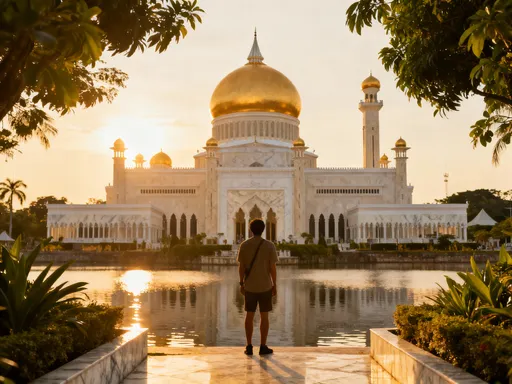
The first true moment of awe often comes when the Omar Ali Saifuddien Mosque appears in the distance. Set against a man-made lagoon and framed by palms, its golden dome catches the morning light like a beacon. This is not just a religious site; it is a declaration of identity, a symbol of Brunei’s deep Islamic roots and its pride in craftsmanship and tradition. For many visitors, this view marks the beginning of a deeper understanding — one that transforms Bandar Seri Begawan from a footnote on a regional itinerary into a destination worthy of its own journey.
The Jewel of the City: Omar Ali Saifuddien Mosque
Standing at the heart of Bandar Seri Begawan, the Omar Ali Saifuddien Mosque is more than an architectural marvel — it is the soul of the city made visible. Completed in 1958 and named after Brunei’s 28th Sultan, this mosque is widely regarded as one of the most beautiful in Southeast Asia. Its design is a masterful fusion of Mughal, Italian Renaissance, and classical Islamic elements, reflecting both Brunei’s regional heritage and its openness to global influences. The central dome, plated in pure gold, rises 52 meters into the sky, catching sunlight throughout the day and glowing warmly at dusk.
The mosque’s exterior is clad in Italian marble, its smooth white surfaces contrasting elegantly with the rich warmth of the dome. Intricate floral patterns and Arabic calligraphy adorn the arches and walls, each detail hand-carved with precision. Inside, the grand prayer hall is illuminated by a massive Austrian chandelier, its crystals refracting light across the marble floors. The ceiling features hand-painted floral motifs in soft blues and golds, creating an atmosphere of celestial beauty. Every material was chosen not only for its aesthetic value but for its symbolic meaning — marble for purity, gold for divine light, and crystal for clarity of faith.
The mosque’s setting enhances its majesty. It sits on a 2.2-hectare artificial lagoon, connected to the main land by a marble causeway. The still waters reflect the structure perfectly, doubling its grandeur and creating a sense of weightlessness, as if the mosque floats between earth and sky. Surrounding the lagoon are manicured gardens with fountains, shaded walkways, and benches where visitors can sit in quiet contemplation. The combination of water, greenery, and architecture creates a space that feels both monumental and intimate — a place where awe and peace coexist.
Beyond the Main Attraction: The Islamic Architectural Park
Just a short walk from the Omar Ali Saifuddien Mosque lies the Islamic Architectural Park, a living tribute to Muslim design across centuries and continents. This open-air museum features meticulously crafted miniature replicas of some of the world’s most iconic mosques, each built to scale and set within a landscaped garden. Here, visitors can walk from the domes of Istanbul to the courtyards of Cairo in a single afternoon. The replica of Istanbul’s Blue Mosque stands with its slender minarets and cascading domes, while the Al-Aqsa Mosque in Jerusalem is represented with its golden dome and octagonal layout, surrounded by arches reminiscent of the original in Jerusalem’s Old City.
Each structure in the park is accompanied by informative plaques that describe its historical and religious significance, architectural style, and cultural context. This educational aspect makes the park especially valuable for families and first-time travelers to the Islamic world. Children can learn about the diversity of Muslim worship spaces, while adults gain a deeper appreciation for the unity and variation in Islamic design principles. The park does not merely display buildings — it tells stories of faith, empire, artistry, and resilience.
What makes the Islamic Architectural Park truly special is how it blends recreation with reverence. Families picnic on the grass, children run between the miniatures, and couples stroll along the pathways, all within a space dedicated to cultural understanding. Unlike many museums, this one encourages interaction, movement, and curiosity. It is not behind glass or ropes — it is lived in, explored, and enjoyed. The park exemplifies Brunei’s commitment to sharing its religious heritage in a way that is accessible, inclusive, and uplifting for all.
Hidden Gems: Lesser-Known Structures with Big Impact
While the Omar Ali Saifuddien Mosque draws the most attention, Brunei’s capital is dotted with smaller, equally meaningful places of worship that reveal another layer of its spiritual and architectural identity. The Sultan Haji Hassanal Bolkiah Mosque, located in the Kiarong neighborhood, is one such gem. Though less ornate than its famous counterpart, it exudes a quiet dignity with its clean lines, white domes, and shaded courtyard. It serves a local community, and its design reflects both modern functionality and traditional aesthetics — a balance that defines much of Brunei’s contemporary mosque architecture.
Walking through residential areas, one notices modest neighborhood mosques tucked between homes and trees. These prayer halls, often painted in soft pastels or white, feature simple domes and minarets, yet they are maintained with great care. Their interiors are clean and welcoming, with patterned carpets and wooden Quran stands. What they lack in scale they make up for in intimacy. They are not built for tourists but for daily prayer, community gatherings, and spiritual reflection. Their presence in everyday life underscores how deeply faith is woven into the fabric of Bruneian society.
Across these structures — grand and humble alike — certain design elements recur: symmetry, calligraphy, and the use of water. Symmetry reflects balance and order, central themes in Islamic thought. Calligraphy, often verses from the Quran, transforms words into art, reminding worshippers of divine presence. And water, whether in fountains, pools, or reflective basins, symbolizes purity and life. These features are not merely decorative; they are integral to the spiritual experience of the space. In Brunei, architecture is not just about shelter — it is about creating environments that elevate the soul.
Design Meets Nature: How Climate Shapes Bruneian Architecture
Brunei’s tropical climate — hot, humid, and rainy for much of the year — has profoundly influenced its architectural style. Traditional Malay design principles, honed over centuries, prioritize ventilation, shade, and protection from heavy rainfall. These practical needs have given rise to features that are now celebrated for both their function and beauty. Elevated floors, wide eaves, and open-air layouts are common in both religious and residential buildings, allowing air to circulate freely and reducing heat buildup.
Mosques in Bandar Seri Begawan often incorporate shaded courtyards and open verandas, where worshippers can gather before or after prayer. These transitional spaces blur the line between indoors and outdoors, inviting the cooling breeze and dappled sunlight. Roofs are designed with steep angles to shed rain quickly, and materials like clay tiles or metal sheets are chosen for their durability and heat resistance. Even the placement of windows and ventilation grilles follows careful calculations to maximize airflow while minimizing direct sun exposure.
In modern constructions, these traditional elements are reinterpreted with contemporary materials and techniques. The use of concrete and glass is balanced with natural wood, louvred panels, and green roofs to maintain thermal comfort. Landscaping plays a crucial role — trees provide shade, while water features help cool the surrounding air through evaporation. The result is architecture that is not only beautiful but deeply responsive to its environment. In Brunei, design is never separate from nature; it is a dialogue with it, a partnership that ensures comfort, sustainability, and harmony.
Photography Tips and Visitor Etiquette
For those eager to capture the beauty of Brunei’s mosques, timing and respect are essential. The best light for photography occurs during the early morning hours, when the sun is low and the air is crisp. At this time, the Omar Ali Saifuddien Mosque glows softly against the sky, and the lagoon reflects its image with mirror-like clarity. Golden hour — the hour before sunset — offers a warmer, more dramatic light, casting long shadows and highlighting textures in the marble and stone. Midday light, while bright, can create harsh contrasts and wash out details, so it is best avoided for serious photography.
Visitors should also be mindful of etiquette when photographing religious sites. While photography is generally permitted in public areas and exteriors, it is important to avoid taking pictures during prayer times or of individuals engaged in worship. Dressing modestly — covering shoulders and knees — is required for all visitors, regardless of faith. This shows respect for local customs and ensures a welcoming experience for everyone. It is also courteous to ask permission before photographing staff or local worshippers.
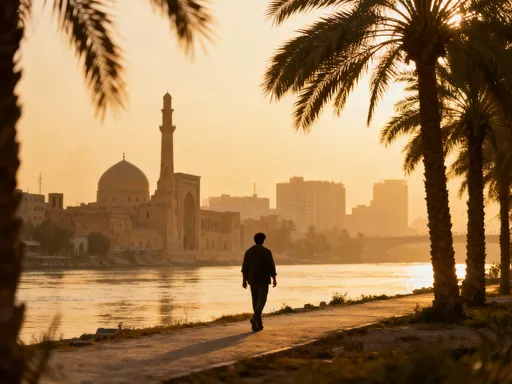
For the most comprehensive shots, consider using a wide-angle lens to capture the full scale of the mosque and its surroundings. A tripod can be useful during early morning or evening visits when light levels are lower. The best vantage points include the causeway leading to the Omar Ali Saifuddien Mosque, the viewing platform near the Islamic Architectural Park, and the riverside walkway along the Brunei River. From these spots, photographers can frame the domes against the sky or reflect them in the water for a truly breathtaking composition.
Why This City Deserves a Spot on Your Travel List
Bandar Seri Begawan may not top every traveler’s list, but for those seeking depth, beauty, and authenticity, it offers something rare. Its architecture is not merely decorative — it is a language, speaking of faith, identity, and cultural pride. Every dome, arch, and calligraphic inscription tells a story of continuity and devotion. In a world where destinations often compete for attention through spectacle and scale, Brunei’s capital stands apart by embracing stillness, elegance, and meaning.
This is a city that rewards the attentive traveler. It does not dazzle with noise or movement but with quiet confidence and craftsmanship. To walk its streets is to experience a different pace of life — one where community, tradition, and nature are valued above speed and consumption. For families, couples, and solo travelers alike, Bandar Seri Begawan offers a chance to reconnect with what travel can truly be: a journey of the senses and the spirit.
In the end, the beauty of Brunei’s hidden mosques is not just in their gold and marble, but in the peace they inspire. They remind us that grandeur does not require excess, and that awe can be found in silence as much as in spectacle. This city does not demand your attention — it earns it, gently, through the power of design, devotion, and dignity. And once you’ve felt that, you’ll understand why it stays with you long after you’ve left.
Bandar Seri Begawan doesn’t shout — it whispers. Its architecture speaks in gold leaf, marble, and stillness. In a world obsessed with speed and scale, this city offers something rare: serenity shaped by stone and faith. If you let it, this place will reset your soul. And honestly? You don’t just see it — you feel it.