You Gotta See These Hidden Architectural Gems in Udaipur
Udaipur isn’t just lakes and sunsets—it’s a living museum of jaw-dropping architecture. I never expected to fall so hard for havelis, stepwells, and palaces that feel like stories carved in stone. Wandering its quieter lanes, I discovered details most tourists miss. If you're heading to Rajasthan and want to see beyond the postcard spots, these real, unfiltered finds will change how you see the City of Lakes forever.
Why Udaipur’s Architecture Stands Out
Udaipur’s buildings are not merely structures; they are poetic expressions of history, climate, and culture woven into stone. Unlike the imposing grandeur of Delhi or the sprawling forts of Jaipur, Udaipur’s architecture feels intimate, almost personal. This intimacy comes from its human scale—many buildings rise no higher than three or four stories, with courtyards that invite quiet contemplation rather than awe from a distance. The city’s location in the Aravalli Hills has shaped its design philosophy: buildings follow the natural contours of the land, blending seamlessly with the surrounding hills and water bodies.
What truly sets Udaipur apart is the fusion of Rajput, Mughal, and later colonial influences. Rajput architecture emphasizes valor, spirituality, and harmony with nature, seen in the use of open courtyards, latticed windows, and temple-inspired domes. Mughal touches appear in the delicate floral inlays, symmetrical layouts, and the integration of water features like fountains and reflecting pools. Later, during the British era, some buildings subtly incorporated European elements such as arched verandas and stained glass, but never at the cost of local identity. This layered aesthetic gives Udaipur a unique architectural voice—one that speaks of resilience, artistry, and quiet confidence.
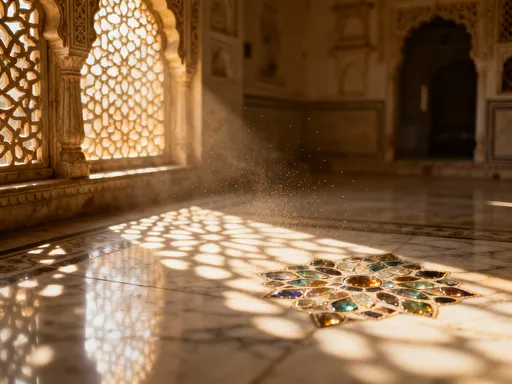
The materials used further deepen this sense of place. Local marble, quarried from the surrounding hills, is the star of Udaipur’s architectural palette. Cool to the touch and luminous in sunlight, it’s carved with astonishing precision into jharokhas (overhanging balconies), jaalis (pierced stone screens), and intricate wall panels depicting mythological scenes. These carvings aren’t mere decoration; they serve functional purposes too—jaalis allow airflow while preserving privacy, and the reflective quality of marble helps regulate indoor temperatures. Water is another key element, not just for beauty but for climate control. Many palaces and havelis are built around central tanks or positioned to catch breezes off Lake Pichola, creating natural cooling systems long before modern air conditioning existed.
This thoughtful integration of form, function, and environment makes Udaipur’s architecture feel alive. It’s not frozen in time but continues to breathe within the rhythm of daily life. Women wash clothes at ancient stone ghats, children play beneath carved archways, and artisans tap chisels against marble in alleyways unchanged for centuries. To walk through Udaipur is to experience architecture not as a monument, but as a companion to everyday existence.
The Must-See Palace Complexes – Beyond the Obvious
The City Palace of Udaipur is not a single building but a sprawling complex that unfolded over nearly 400 years, beginning in 1559 under Maharana Udai Singh II. What makes it extraordinary is not just its size—it’s one of the largest palace complexes in Rajasthan—but the way it evolved organically, with each ruler adding a wing, courtyard, or tower that reflected both personal taste and the times. The result is a rich architectural tapestry where early Rajput styles meet later Mughal elegance and even hints of European influence.
Most visitors head straight for the grand courtyards and museum rooms, but the real magic lies in the details. Take the Mor Chowk, or Peacock Courtyard, built in the 18th century by Maharana Ari Singh. Its name comes from the stunning mosaic work on the walls, where thousands of colored glass and mirror pieces form life-sized peacocks in full plumage. Each bird is so vividly rendered that you can almost see the feathers shimmer in the breeze. The craftsmanship here is a testament to the skill of local artisans, who used no modern adhesives or tools—just lime mortar, hand-cut glass, and infinite patience. The courtyard also features zodiac signs embedded in the design, reflecting the royal family’s deep interest in astrology and cosmology.
To truly appreciate such spaces, timing is everything. Arrive early in the morning, just after the gates open, and you’ll have the courtyards almost to yourself. The soft morning light filters through the jharokhas, casting delicate shadows on the marble floors. By midday, the sun beats down harshly, washing out colors and making photography difficult. But return in the late afternoon, especially around golden hour, and the palace transforms. The western-facing facades glow in warm amber tones, and the marble seems to radiate light from within. This is when the carvings come alive, their depth and texture revealed in the slanting rays.
Another often-overlooked feature is the adaptive reuse of spaces. What was once a royal armory now houses a textile museum. A former zenana (women’s quarters) displays miniature paintings. These transitions show how the palace remains a living entity, not a static relic. For travelers, this means every visit offers something new—not just in terms of sightseeing, but in understanding how heritage can be preserved without being frozen in time.
Hidden Havelis: Where Art Lives in Stone
While palaces capture headlines, Udaipur’s havelis—traditional mansions built by wealthy merchants and court officials—are where architectural artistry reaches its most intimate expression. These homes were not just symbols of status but canvases for storytelling, with every wall, window, and doorway conveying messages about the family’s values, beliefs, and aspirations. Unlike the fortified exteriors of havelis in cities like Jaisalmer or Bikaner, Udaipur’s havelis often feature more open, welcoming facades, reflecting the city’s emphasis on beauty and harmony.
Two of the most striking examples are Saalumal Haveli and Shikarbadi Haveli, both tucked away in the narrow lanes of the old city. Saalumal Haveli, built in the 19th century, boasts a magnificent facade adorned with frescoes depicting scenes from Krishna’s life. The colors—deep blues, saffron yellows, and rich reds—have faded slightly with time, but their vibrancy still surprises. Look closely, and you’ll notice how the artists used natural pigments derived from minerals and plants, a technique that has allowed the paintings to endure for over a century. The haveli’s jharokhas are equally impressive, with stone brackets carved into floral and animal motifs that seem to defy gravity.
Shikarbadi Haveli, though less restored, offers a more authentic glimpse into the past. Its walls bear the marks of time—cracks, peeling plaster, and weathered carvings—but this only adds to its charm. Here, you can see how architectural elements were designed for daily life: raised platforms for sitting in the evening breeze, hidden niches for oil lamps, and ventilation shafts that draw cool air from underground. These details reveal a deep understanding of climate-responsive design, long before the term became popular in modern architecture.
For travelers, the best way to experience these havelis is on foot, following a quiet walking route through the old city. Start at Gangaur Ghat and wander through the lanes behind Jagdish Temple, where many of the most beautiful havelis are clustered. Move slowly, look up, and don’t be afraid to pause and ask permission before entering a courtyard—many are still occupied by descendants of the original families. A respectful smile and a few kind words can open doors, both literal and metaphorical. And while you’re exploring, remember that the most breathtaking details are often at eye level or higher—on lintels, cornices, and ceiling beams—places that demand you look beyond the surface.
Stepwells and Water Structures with Soul
In a region where water has always been precious, stepwells are more than engineering marvels—they are sacred spaces, community hubs, and architectural masterpieces. Udaipur and its surroundings are home to several such structures, though many remain off the standard tourist trail. One of the most accessible is Chand Pol Baori, located just outside the city walls near the Chand Pol gate. Unlike the grand, multi-tiered stepwells of Gujarat, this one is modest in scale but rich in character. Its stone steps descend in a graceful curve, flanked by carved pillars and small shrines dedicated to local deities.
Stepwells like Chand Pol Baori served multiple functions. First, they provided reliable access to groundwater, especially during the long dry months. The depth of the well ensured water remained available even when surface sources dried up. Second, they acted as social spaces where women gathered to collect water, share news, and build community. Third, they were places of spiritual significance, often aligned with temples or built on pilgrimage routes. The combination of utility, culture, and faith is what gives these structures their soul.
Visiting a stepwell today requires a shift in mindset. These are not ruins but living spaces, still used by locals for ritual bathing and daily needs. When you visit, move quietly and respectfully. Avoid loud conversations or intrusive photography, especially if people are praying or performing rituals. Dress modestly, remove your shoes if entering a shrine area, and never litter. A small offering at a shrine or a quiet moment of observation can be more meaningful than any souvenir.
Another remarkable water structure is the Rani Badi near the village of Eklingji, about 20 kilometers north of Udaipur. Less visited and beautifully preserved, it features symmetrical staircases descending on both sides, with small pavilions at each level. The surrounding area is lush with trees, creating a cool microclimate that makes it a perfect spot for reflection. These lesser-known sites remind us that Udaipur’s architectural heritage extends far beyond the city center, into the rural landscape where tradition continues to thrive.
Local Craftsmanship You Can Actually See at Work
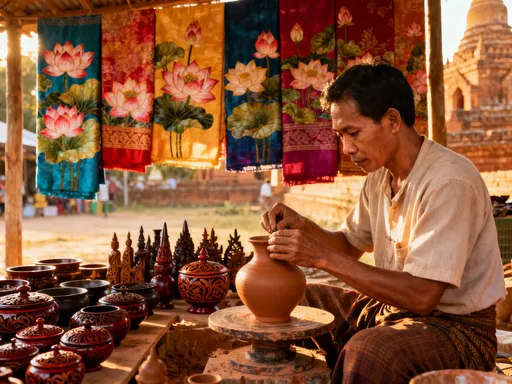
One of the most rewarding aspects of visiting Udaipur is witnessing the living traditions that built its architecture. In neighborhoods like Bapu Nagar and Ambamata, you can find workshops where stone carvers, mirror workers, and fresco painters continue to practice techniques passed down through generations. These artisans are the unsung heroes of Udaipur’s beauty, their hands shaping the very details that make the city unforgettable.
Take a walk through the back alleys near the City Palace, and you might hear the rhythmic tapping of chisels on marble. Inside small, open-front workshops, craftsmen hunch over slabs of stone, carving intricate jaalis or floral borders with tools that have changed little in centuries. Some specialize in pietra dura, the inlay technique used in the Peacock Courtyard, where tiny pieces of colored stone are fitted into marble to create elaborate patterns. Watching them work is mesmerizing—each movement deliberate, each cut precise. It can take weeks to complete a single panel, yet their focus never wavers.
Equally fascinating are the mirror-work artisans, whose craft adorns the interiors of havelis and temples. Using fragments of glass and reflective foil, they create dazzling geometric and floral designs that catch and multiply light. This technique, known locally as *shisha work*, was originally developed to brighten dimly lit rooms before electricity. Today, it’s still used in restoration projects and new designs that honor traditional aesthetics.
If you wish to observe or support these crafts, do so ethically. Ask permission before entering a workshop. Buy directly from artisans or certified cooperatives, not from middlemen who may underpay them. And remember, your presence is a privilege—not an entitlement. A respectful demeanor, genuine curiosity, and fair compensation go much further than taking dozens of photos. By supporting these craftspeople, you help ensure that Udaipur’s architectural soul remains alive for future generations.
Best Times & Angles for Experiencing the Architecture
To fully appreciate Udaipur’s architecture, you must consider not just what you see, but when and how you see it. Light is everything. Early morning, just after sunrise, is ideal for photography and quiet contemplation. The soft, diffused light enhances textures without creating harsh contrasts. This is the perfect time to visit the City Palace courtyards, where shadows stretch long across the marble, highlighting the depth of carvings and the play of light through jaalis.
Late afternoon, particularly in the hour before sunset, offers a different kind of magic. As the sun dips toward the Aravalli Hills, it bathes the palaces and havelis in golden light, making the white marble appear almost translucent. This is when Lake Pichola becomes a mirror, reflecting the silhouettes of buildings in shimmering detail. A short ferry ride from Gangaur Ghat to Jag Mandir provides one of the most breathtaking panoramic views in the city, with the entire lakeside skyline unfolding before you.
Avoid midday if possible. The high sun creates flat lighting that dulls colors and flattens textures, making even the most ornate facades look bland. Plus, the heat can be intense, especially in summer, making walking uncomfortable. If you must explore during this time, seek shade in covered walkways or visit indoor spaces like the City Palace museum or the Bagore Ki Haveli cultural center.
For a unique perspective, consider visiting viewpoints outside the city center. The Monsoon Palace (Sajjangarh), perched on a hilltop west of the city, offers a sweeping aerial view of Udaipur’s architectural layout. From here, you can see how the palaces, havelis, and temples are arranged around the lakes, forming a harmonious relationship between built and natural environments. Visit at sunset for an unforgettable panorama, but arrive early to secure parking and avoid the evening rush.
How to Travel Deeper – Practical Tips for Curious Explorers
To truly connect with Udaipur’s architecture, slow down. Rushing from one landmark to the next will only scratch the surface. Instead, adopt the pace of the city itself—measured, observant, and reflective. Begin by hiring a local heritage guide rather than relying on generic tour operators. A knowledgeable guide from the old city can point out details you’d otherwise miss: a hidden inscription, a symbolic carving, or the story behind a particular haveli. Many of these guides are historians or former teachers who speak fluent English and are passionate about sharing their city’s legacy.
Plan your days around quiet moments. After visiting a palace or haveli, pause at a family-run café nearby. Places like Jai Arjun Restaurant or Millets of Mewar offer simple, wholesome meals in peaceful settings. Sip a cup of herbal tea while watching the world go by—this is when insights often come, when the mind has space to absorb what the eyes have seen. These small pauses are not distractions; they are essential to deep travel.
Walk mindfully. Keep your eyes up, not down at a map or phone. Look for patterns in the stone, the way light falls on a wall, the sound of water trickling from an old fountain. Greet shopkeepers with a smile, and if invited for tea, accept with gratitude. These human connections enrich your understanding of the architecture, reminding you that buildings are made for people, not just for photographs.
Finally, practice respectful behavior. Avoid touching carvings or climbing on historic structures. Follow local customs at religious sites. And above all, travel with humility. Udaipur does not exist for your Instagram feed; it is a living city with a deep history and vibrant present. When you move through it with care and curiosity, you don’t just see its beauty—you begin to feel it.
Conclusion
Udaipur’s architecture isn’t just about grandeur—it’s in the details, the shadows, the quiet corners. By looking closer and moving slower, travelers gain more than photos; they gain a sense of place that lingers long after they leave. This city invites you not just to see, but to feel its stone soul. From the whisper of wind through a jaali to the cool touch of marble underfoot, every sensation tells a story. These hidden gems—the forgotten havelis, the working stepwells, the artisan’s chisel—are not side notes to the journey. They are the heart of it. And when you discover them, you don’t just visit Udaipur. You begin to understand it.