What Trincomalee’s Hidden Districts Taught Me About Real Sri Lankan Culture
You know that feeling when a place completely flips your expectations? That’s Trincomalee. Beyond its famous beaches, this coastal gem reveals soul-deep culture through its city districts—each with its own rhythm, language, and traditions. I didn’t just visit; I wandered, listened, and connected. From temple bells echoing at dawn to street vendors calling out in Tamil and Sinhala, Trincomalee isn’t just seen—it’s felt. What began as a search for scenic beauty became a journey into the heart of Sri Lanka’s cultural mosaic. In its quiet alleys and sacred corners, I discovered not only history but humanity—lived, breathed, and shared with quiet pride.
Discovering Trincomalee: More Than a Beach Destination
Trincomalee, often celebrated for its sweeping golden shores and turquoise waters, is more than a tropical escape. Nestled on the northeast coast of Sri Lanka, this ancient port city has long served as a crossroads of civilizations, faiths, and trade routes. While many travelers arrive drawn by postcard-perfect images of Nilaveli and Uppuveli beaches, the deeper essence of Trincomalee lies beyond the coastline—in its neighborhoods, where daily life unfolds with a rhythm shaped by centuries of cultural convergence. The city’s districts—Swami Temple, Kanniya, Fort Frederick, Chingamalai, and others—each carry distinct identities, shaped by Tamil heritage, Sinhalese presence, colonial imprints, and indigenous traditions.
Historically, Trincomalee was a prized harbor, coveted by the Portuguese, Dutch, and British for its strategic depth and natural protection. These layers of colonial influence remain visible in weathered stone gateways, military ruins, and street names that whisper of distant empires. Yet, beneath these physical traces lies something more enduring: a multicultural coexistence that has withstood time and turbulence. Unlike tourist zones where culture can feel curated, Trincomalee’s districts offer authenticity—not as performance, but as lived reality. Here, temple festivals spill into streets, fishermen return with nets heavy from the sea, and elders gather in shaded verandas to recount stories passed down through generations.
What sets Trincomalee apart is not merely its diversity, but how seamlessly these threads are woven into everyday life. A Tamil schoolteacher may share stories of Koneswaram Temple with her Sinhalese neighbor; a Muslim vendor might sell herbal remedies outside a Hindu kovil; children from different backgrounds play cricket together on dusty lanes. This quiet harmony is not the result of policy or propaganda, but of shared geography, mutual respect, and generations of coexistence. To explore Trincomalee’s districts is to witness a living example of pluralism—one that feels organic, resilient, and deeply human.
The Heartbeat of Swami Temple District: Spirituality in Motion
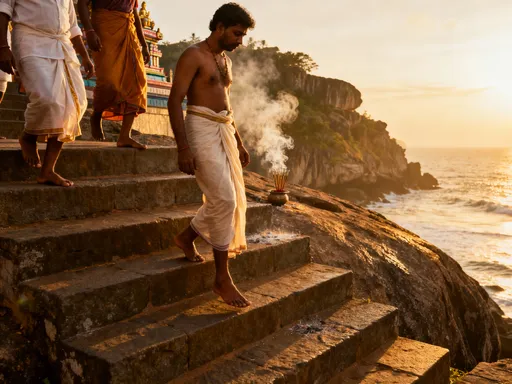
Rising above the eastern coast on a rocky promontory known as Swami Rock, the Koneswaram Temple anchors the spiritual life of Trincomalee. The surrounding district, often referred to as the Swami Temple area, pulses with devotion, tradition, and architectural grandeur. At sunrise, the air fills with the scent of sandalwood and jasmine as priests prepare for morning pujas, and the sound of temple bells mingles with the distant crash of waves below. Pilgrims, many arriving from Tamil Nadu in India and other parts of Sri Lanka, walk barefoot up the steep stone steps, their offerings wrapped in banana leaves. This is not a place of passive observation; it is a living sanctuary where faith is both personal and communal.
The temple itself, though rebuilt multiple times after colonial destruction, stands as a testament to resilience. Its current Dravidian-style gopuram, painted in vibrant ochres and blues, rises dramatically against the sky, adorned with intricate carvings of deities, mythical creatures, and celestial dancers. Inside, the sanctum enshrines Lord Shiva in the form of Kona-Ishwara, believed to be one of the five sacred abodes of Shiva in the region. The temple’s location—perched over the Indian Ocean—adds to its mythic significance, with legends speaking of divine protection and miraculous origins. For locals, the temple is not only a place of worship but a cultural anchor, influencing everything from naming ceremonies to agricultural cycles.
Daily life in the Swami Temple district reflects this deep spiritual integration. Small kiosks sell flowers, coconuts, and incense; families gather after rituals to share meals at roadside eateries serving vegetarian thalis; schoolchildren recite Sanskrit slokas during temple festivals. Even non-devotees respect the rhythms of the temple—the quiet during prayer hours, the increased activity during full moon days, the festive glow during Maha Shivaratri. The district also serves as a center for Tamil cultural preservation, with classical music and dance performances held regularly. Here, religion is not separate from life; it is the rhythm that shapes it.
Kanniya’s Thermal Springs and Time-Honored Traditions
A short distance from the city center lies Kanniya, a neighborhood renowned for its natural hot springs—a rare geothermal phenomenon in Sri Lanka. Unlike commercial spas or tourist-oriented bathhouses, Kanniya’s springs remain a place of community use and cultural significance. The water, emerging from six distinct wells at temperatures ranging from 50°C to 70°C, is believed to possess healing properties, particularly for skin conditions, joint pain, and respiratory ailments. Locals, especially elders, visit regularly, often arriving in the early morning to bathe in the open-air stone enclosures. Families bring children, treating the springs as both a wellness ritual and a social gathering.
The origins of Kanniya’s springs are steeped in folklore. One popular legend tells of a devoted wife whose tears, shed in prayer for her ailing husband, created the hot waters. Another links the site to ancient Ayurvedic traditions, where healers used mineral-rich waters in holistic treatments. While scientific studies have confirmed the presence of sulfur and other minerals in the water, the true value of Kanniya lies in its cultural continuity. The springs are not marketed or commodified; they are maintained by the community, with simple changing areas and no entry fees. This accessibility ensures that wellness remains a shared heritage, not a privilege.
Kanniya’s identity is deeply Tamil, reflected in its language, cuisine, and customs. Women in colorful sarees carry brass pots to collect spring water for home rituals; elders sit under neem trees discussing village affairs; street vendors sell steaming cups of milagai tea and murukku. The neighborhood hosts annual festivals where traditional drumming, folk dances, and temple processions draw visitors from surrounding areas. Even as modern housing and infrastructure expand, Kanniya has preserved its soul—a place where ancestral knowledge is not archived, but lived. For the traveler, a visit here offers a rare glimpse into wellness as a cultural practice, rooted in nature, faith, and community.
Forts and Memories: Colonial Layers in Fort Frederick
At the northern tip of Trincomalee’s harbor stands Fort Frederick, a relic of colonial ambition and military strategy. Originally built by the Portuguese in the 17th century and later expanded by the Dutch and British, the fort once guarded one of the finest natural harbors in the Indian Ocean. Today, its weathered ramparts, moss-covered cannons, and arched gateways stand in quiet contrast to their violent past. No longer a military zone, the fort has been reclaimed by the public, serving as a promenade, picnic spot, and vantage point for breathtaking sunsets over the bay. The transformation from fortress to communal space reflects Trincomalee’s ability to absorb history without being imprisoned by it.
Walking through Fort Frederick, one encounters layers of time. Portuguese builders laid the first stones, Dutch engineers reinforced the bastions, and British officers walked these same paths, commanding fleets that once dominated regional trade. The fort’s star-shaped design, typical of European military architecture, remains visible in aerial views, though much of the original structure has eroded or been repurposed. Some sections now house administrative offices, while others are open to visitors. Interpretive signs, though limited, provide brief historical notes, but the real story is told through the stones themselves—chipped by cannon fire, softened by monsoon rains, and marked by generations of hands.
What makes Fort Frederick remarkable today is not its military past, but its peaceful present. Locals stroll along the ramparts in the evenings, children fly kites on the grassy fields, and fishermen mend nets near the old moat. On weekends, families gather for meals under shaded trees, sharing stories as the sea breeze rolls in. The fort has become a symbol of reclamation—of space, memory, and identity. It reminds visitors that history need not be a burden, but a foundation. For those interested in colonial architecture or military history, the site offers tangible connections to the past. For others, it provides a quiet place to reflect on resilience, change, and the enduring human capacity to transform conflict into community.
Garden of the Sea: The Lively Pulse of Chingamalai
South of the harbor lies Chingamalai, a residential neighborhood whose name—meaning “hill of victory” or “mountain of the sea”—evokes both geography and spirit. This vibrant district is a mosaic of small homes, family-run shops, Hindu kovils, and community gardens. Unlike more tourist-visible areas, Chingamalai remains largely untouched by commercial development, preserving the rhythm of everyday life. Streets are lined with frangipani and hibiscus; laundry flutters between balconies; and the call to temple prayer blends with the chatter of neighbors greeting one another by name. Here, community is not an ideal—it is a daily practice.
Chingamalai’s religious life centers around several small but active temples, each serving a specific clan or village origin. During festival seasons, the neighborhood transforms. Streets are decorated with oil lamps, colorful kolams (rice flour designs) appear at doorsteps, and processions wind through lanes with drummers, dancers, and statues of deities carried on shoulders. The annual Pongal festival, marking the harvest, is especially significant, with families preparing sweet rice dishes, offering thanks to the sun god, and sharing meals with neighbors regardless of background. These celebrations are not performances for outsiders; they are intimate expressions of faith and belonging.
The district also exemplifies sustainable living. Many homes incorporate rainwater harvesting, kitchen gardens, and natural ventilation—practices passed down through generations. Fishing families still return with daily catches, selling directly from baskets at the corner markets. Children play in open courtyards, their games blending modern influences with traditional rhymes. Women gather in the afternoons to stitch, cook, or discuss community matters. Chingamalai’s strength lies in its self-sufficiency and social cohesion. For the mindful traveler, a walk through its lanes offers a rare opportunity to witness culture not as spectacle, but as a living, breathing entity—one that thrives quietly, without fanfare.
Cultural Crossroads: Language, Food, and Daily Rhythms
One of the most revealing aspects of Trincomalee’s districts is the way language, food, and routine reflect cultural identity. Tamil is the dominant language in neighborhoods like Swami Temple, Kanniya, and Chingamalai, spoken in homes, markets, and temples. Yet Sinhala is also present, particularly in government offices, schools, and mixed neighborhoods. English, though less common, appears in signage and among younger generations educated in urban centers. This linguistic blend is not merely functional—it is symbolic of coexistence. Elders may speak only Tamil, while grandchildren switch effortlessly between languages, embodying the city’s evolving identity.
Cuisine tells a similar story. Breakfast might include hoppers with coconut sambol in a Sinhalese household, while a Tamil family prepares string hoppers with kudu (coconut milk curry). Street vendors sell kottu roti, a beloved national dish born from resourcefulness—chopped flatbread stir-fried with vegetables, egg, or meat. In Kanniya, you might find elders sipping keerai kool, a nutritious spinach-based soup once used in Ayurvedic regimens. At temple festivals, sweet rice dishes like pongal and milk rice are shared freely, reinforcing the idea that food is not just nourishment, but connection.
Daily rhythms vary by district but share a common thread: alignment with nature and tradition. Fishermen in Chingamalai rise before dawn to launch boats, returning by mid-morning with the day’s catch. Temple bells mark time in the Swami district, while schoolchildren in Kanniya walk home under the noon sun, books in hand. In the evenings, families gather on verandas, watching the sky turn from gold to indigo. These routines are not rigid, but deeply rooted—shaped by climate, faith, and community values. For the traveler, observing these patterns offers insight into a way of life that values balance, presence, and interdependence.
Traveling with Respect: How to Engage Authentically
To visit Trincomalee’s districts is to be invited into intimate spaces—not as a spectator, but as a respectful guest. Mindful travel begins with awareness. When visiting temples, modest dress is essential: shoulders and knees should be covered, and footwear removed before entering sacred spaces. Visitors should avoid interrupting rituals, refrain from loud conversation, and seek permission before photographing devotees. The best times to visit religious sites are early morning or late afternoon, when the atmosphere is most serene and participation is most authentic.
Engaging with local culture goes beyond observation. Supporting small businesses—family-run eateries, craft vendors, guesthouses—ensures that tourism benefits the community directly. A simple meal at a local kade (shop) or a purchase of handmade incense or pottery contributes more than any luxury resort stay. Learning a few phrases in Tamil or Sinhala—such as “hello” (vanakkam / ayubowan) or “thank you” (nandri / isthuthi)—opens doors and signals respect. Most locals appreciate genuine curiosity, especially when it comes without judgment or assumptions.
Slow travel is the most effective way to connect. Rather than rushing from one site to another, spending time in a single neighborhood allows deeper understanding. Sitting with a local elder, sharing a cup of tea, or joining a community event—even silently—can be more meaningful than any guided tour. Travelers should also be mindful of environmental impact, avoiding plastic, conserving water, and respecting natural sites like the hot springs and coastal areas. Ultimately, authentic engagement is not about doing everything right, but about approaching each interaction with humility, openness, and a willingness to listen.
Trincomalee’s true magic lies not in postcard views but in its living culture—preserved in neighborhoods often overlooked. By exploring its districts, travelers don’t just see Sri Lanka; they begin to understand it. This city invites not just sightseeing, but soul-seeing. In its temples, springs, forts, and quiet lanes, one discovers a culture that has endured, adapted, and thrived—not through isolation, but through connection. To walk Trincomalee’s streets is to witness resilience, harmony, and the quiet beauty of everyday life. And in that witnessing, we find not only the soul of a place, but a reflection of our own humanity.