Beyond the Ruins: Secret Natural Wonders Near Machu Picchu You’ve Never Seen
Most visitors flock to Machu Picchu for its ancient stones, but few realize the surrounding natural beauty is just as breathtaking. Hidden valleys, misty cloud forests, and rushing mountain rivers create a living landscape beyond the ruins. I ventured off the beaten path and discovered serene spots where nature reigns undisturbed. These places aren’t in every guidebook, but they’re essential for truly experiencing Peru’s magic. Let me take you where few tourists go—into the wild heart of the Andes.
The Overlooked Wild Side of a Famous Icon
Machu Picchu is renowned as a masterpiece of Incan engineering, a citadel carved from stone and perched high above the Urubamba River. Yet, the profound natural setting that frames this architectural wonder often fades into the background of tourist photography and travel narratives. The site is not merely a historical monument—it is embedded within one of the most biodiverse regions on Earth, where the Andean highlands merge with the upper Amazon basin. This ecological convergence creates a unique environment that supported both the spiritual beliefs and agricultural practices of the Inca civilization.
The terrain surrounding Machu Picchu is far from barren or incidental. It is a dynamic ecosystem teeming with life, from high-altitude grasslands to dense montane forests. Orchids cling to moss-covered trees, spectacled bears roam remote slopes, and over 400 bird species have been recorded in the region. These natural features were not accidental to the Inca’s choice of location—they were central. The Incas revered natural elements like mountains, rivers, and springs as sacred, integrating them into their cosmology and urban planning. Yet today, many travelers pass through without recognizing how deeply culture and nature are intertwined here.
This oversight reflects a broader tendency in modern tourism: the prioritization of monuments over landscapes. Visitors climb the terraces, marvel at the Temple of the Sun, and snap photos of the panoramic views, but few descend into the adjacent valleys or follow the lesser-known trails that reveal the full scope of this environment. As a result, the living context of Machu Picchu—the very reason it was built where it was—remains underappreciated. By shifting focus beyond the ruins, travelers can gain a richer, more holistic understanding of this iconic site and the civilization that created it.
The Magic of the Sacred Valley’s Untouched Corners
Just a short journey from the bustling entrance of Machu Picchu lies the quieter, more intimate beauty of the Sacred Valley’s hidden reaches. Along the meandering Urubamba River, agricultural terraces built centuries ago blend seamlessly into wild mountain slopes, where nature has slowly reclaimed what time and tradition have left behind. These transitional zones—between cultivated land and untouched wilderness—are among the most enchanting parts of the region, offering solitude, breathtaking scenery, and a rare connection to the enduring rhythms of Andean life.
One such area is the trail leading from the village of Huilloc toward the lesser-visited archaeological site of Pisac. While Pisac’s ruins attract some tourists, the path through the surrounding hills remains largely uncrowded, winding through eucalyptus groves and pastures dotted with grazing alpacas. Here, the air carries the scent of wild herbs, and the calls of Andean doves echo in the early morning stillness. Hikers may encounter local farmers tending their crops using methods passed down through generations, their faces weathered by sun and wind, their movements in harmony with the land.
Another quiet gem is the stretch of riverbank near the community of Amaru. Accessible via a short detour from the main train line, this area features riparian woodlands rich in birdlife, including the vibrant Andean motmot and the elusive torrent duck. Native orchids bloom in shaded clearings, their delicate petals unfurling after morning rains. These spots are not preserved as formal parks or tourist attractions, but they are protected in spirit by local communities who understand their value—not just for tourism, but for cultural continuity and environmental health.
Conservation efforts in these areas are growing, driven by both indigenous stewardship and eco-tourism initiatives. Community-led projects promote sustainable agriculture, reforestation, and responsible visitation. Some villages now offer guided walks led by local residents, ensuring that tourism benefits the people who have lived here for centuries. These experiences provide more than scenic views—they offer insight into a way of life that remains deeply connected to the land. For travelers seeking authenticity, these quiet corners of the Sacred Valley represent a more meaningful alternative to crowded overlooks and timed entry tickets.
Cloud Forest Trails: Where Mist Meets Mountain Greenery
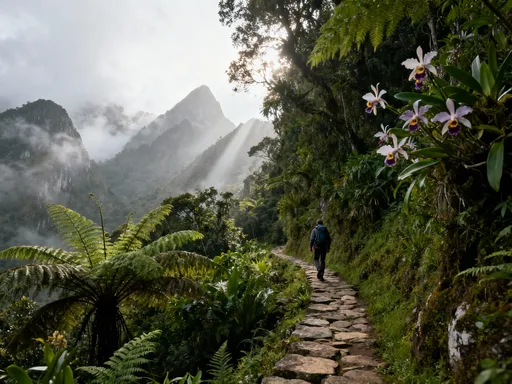
To the east of Machu Picchu, the landscape rises into a realm of perpetual mist and lush vegetation—the cloud forests of the Peruvian Andes. These high-altitude forests, shrouded in moisture-laden air, are among the most biologically rich ecosystems in South America. Here, ancient trees are draped in mosses and ferns, bromeliads bloom in vibrant clusters, and the air hums with the quiet life of insects, amphibians, and birds. This is a world apart from the sunlit stone terraces of the citadel, yet it is just as integral to the story of Machu Picchu.
One accessible route into this enchanting environment is the lower section of the Inca Trail network, particularly the path that descends from the Sun Gate toward the river. While most tourists walk this trail in reverse—ascending toward the famous sunrise view—few take the time to notice the subtropical flora that flourishes along the way. Tree ferns tower overhead, their fronds catching droplets from passing clouds. Streams cascade down rocky slopes, their waters feeding into the Urubamba River system. The humidity sustains a remarkable diversity of life, including several species of poison dart frogs and the endangered yellow-tailed woolly monkey.
Another option for experiencing the cloud forest is the approach to Choquequirao, a remote Incan site often called the “sister city” of Machu Picchu. Though the full trek is challenging, even the initial stages pass through pristine forest zones where human presence is minimal. Hikers may spot the tracks of the spectacled bear, the only bear species native to South America, or hear the distant call of the Andean cock-of-the-rock, Peru’s national bird. These encounters are not staged or guaranteed—they are moments of genuine wilderness, made possible by the region’s relative inaccessibility.
Ecologically, cloud forests play a critical role in water regulation. Their dense vegetation captures moisture from passing clouds, a process known as horizontal precipitation, which supplements rainfall and feeds springs and streams. This natural irrigation system was vital to the Incas, who relied on consistent water flow for their agriculture. Today, these forests continue to supply water to downstream communities and support the biodiversity that defines the region. Protecting them is not just an environmental imperative—it is a cultural necessity, ensuring that future generations can experience the same balance of nature and heritage that shaped the Inca world.
Hidden Rivers and Natural Springs Around the Citadel
Beneath the grandeur of Machu Picchu’s stone structures lies a quieter, yet equally impressive, network of natural water sources. The site was not chosen at random; its location was dictated in large part by the availability of fresh water. A series of natural springs emerge from the mountain’s base, feeding a sophisticated system of stone channels and fountains that once supplied the entire settlement. These springs are not relics—they still flow today, their clear waters winding through the ruins and disappearing into the forest below.
One of the most remarkable aspects of Machu Picchu’s hydrology is its integration with the natural landscape. The Incas did not divert or dam these waters; instead, they channeled them with precision, using gravity and careful stonework to direct flow without disrupting the ecosystem. The main spring, located on the north side of the site, feeds a sequence of 16 fountains, each positioned at a slightly lower elevation than the last. This engineering marvel ensured a constant supply of clean water for drinking, bathing, and ritual use, all while maintaining the sanctity of the water’s natural origin.
Yet beyond the citadel’s walls, even more secluded water features await discovery. Along the path leading to the Inca Bridge—a narrow trail cut into the cliffside—hikers can find small cascades where water spills over mossy rocks into quiet pools. These spots are rarely included in standard tours, which focus on the main ruins, but they offer a sense of tranquility and immersion in nature that is difficult to find elsewhere. The sound of flowing water, the cool mist in the air, and the green glow of ferns create a meditative atmosphere, far removed from the chatter of tour groups.
Access to some of these areas requires caution and, in certain cases, a guide. The terrain can be slippery, especially during the rainy season, and some trails are not well marked. However, for those willing to explore responsibly, the rewards are profound. These hidden rivers and springs are not just functional features—they are sacred elements, revered by the Incas as manifestations of Pachamama, or Mother Earth. To stand beside one is to touch a living thread of history, where engineering, spirituality, and ecology converge in perfect harmony.
Why These Natural Areas Deserve Equal Attention
It is time to reconsider how we perceive Machu Picchu. For decades, the site has been celebrated primarily as a cultural treasure—a testament to Incan ingenuity and architectural mastery. While this recognition is well deserved, it has overshadowed the equally important natural heritage that surrounds it. The truth is that Machu Picchu cannot be fully understood without acknowledging the environment that shaped it. The Incas did not build in isolation; they responded to the land, its contours, its waters, and its spiritual energies. Their choices were guided as much by ecological wisdom as by religious belief.
Consider the numbers: over 1.5 million visitors arrive at Machu Picchu each year, most of them following the same well-trodden paths through the central plaza and up to the Sun Gate. In contrast, only a small fraction venture into the adjacent forests, rivers, or highland meadows. This imbalance in visitation patterns not only limits travelers’ experiences but also places disproportionate pressure on the archaeological site itself. Meanwhile, the surrounding ecosystems—though less visited—face growing threats from climate change, deforestation, and unregulated tourism.
Protecting these natural areas is not a secondary concern—it is essential to the long-term preservation of Machu Picchu as a whole. UNESCO recognized this when it designated the Historic Sanctuary of Machu Picchu as a Mixed World Heritage Site in 1983, citing both its cultural and natural significance. The sanctuary spans over 32,000 hectares, encompassing not just the ruins but also vast tracts of cloud forest, rivers, and high-altitude grasslands. This designation underscores a vital truth: culture and nature are not separate here—they are interwoven.
When travelers focus solely on the ruins, they risk reducing Machu Picchu to a static monument, frozen in time. But the site is part of a living landscape, one that continues to evolve and inspire. By giving equal attention to the natural wonders around it, visitors can develop a deeper appreciation for the Inca worldview—one that saw no division between human achievement and the natural world. This shift in perspective is not just educational; it is transformative, fostering a more respectful and sustainable approach to travel.
How to Visit Responsibly and Mindfully
Experiencing the natural wonders near Machu Picchu requires more than just curiosity—it demands responsibility. The delicate ecosystems of the Andes are vulnerable to even small disruptions, and the increasing number of visitors means that every choice matters. The good news is that mindful travel is both possible and rewarding. With a few thoughtful decisions, travelers can minimize their impact while gaining a richer, more authentic experience.
One of the most effective ways to travel responsibly is to hire a local eco-guide. These guides are often members of nearby communities who have grown up in the region and possess deep knowledge of its ecology, history, and cultural values. They can lead visitors to lesser-known trails, interpret the significance of natural features, and ensure that all safety and environmental guidelines are followed. Supporting local guides also contributes directly to the economic well-being of Andean communities, promoting sustainable development.
Sticking to marked trails is another essential practice. While the temptation to explore off-path may be strong, trampling vegetation or disturbing wildlife can have lasting consequences. Many of the plants in the cloud forest grow slowly and are easily damaged. Similarly, avoiding single-use plastics helps prevent pollution in rivers and forests. Travelers can carry reusable water bottles, use biodegradable toiletries, and pack out all waste.
Timing also plays a role in responsible travel. Visiting during the shoulder seasons—late April to early June or September to early November—can reduce crowding and lessen environmental strain. These periods offer mild weather, fewer tourists, and clearer views of the landscape. They also allow for a more peaceful experience, whether hiking through misty forests or sitting quietly by a mountain stream.
Finally, travelers should approach the region with respect for indigenous land values. The Andes are home to communities that have lived in harmony with this environment for centuries. Their traditions, beliefs, and stewardship practices are integral to the region’s resilience. By listening to local voices, following regulations, and recognizing the sacredness of the land, visitors can become allies in preservation rather than contributors to degradation.
Conclusion: Rediscovering Machu Picchu Through Its Wilderness
The true essence of Machu Picchu lies not only in its stone walls and terraced fields but in the vibrant, breathing world that surrounds it. To walk its ruins without experiencing the cloud forests, rivers, and hidden valleys is to see only half the story. The Incas understood this balance—they built in dialogue with nature, honoring its power and wisdom. Today, we have the opportunity to do the same.
By venturing beyond the main pathways, travelers can rediscover Machu Picchu as a living sanctuary, where culture and nature coexist in harmony. These lesser-known areas offer more than scenic beauty; they provide a chance to slow down, to listen, and to connect with something deeper. The rustle of leaves in the wind, the murmur of a mountain stream, the sight of an orchid blooming in the mist—these are not mere background details. They are the quiet heartbeat of a place that has endured for centuries.
As tourism continues to grow, so does the need for a more thoughtful way of exploring. Let us move beyond checklist travel and seek experiences that honor both human history and the natural world. Let us look beyond the ruins and see the forest, the river, the mountain—not as scenery, but as co-creators of wonder. In doing so, we do not just visit Machu Picchu. We begin to understand it.