What Bologna’s Culture Taught Me About Real Italian Life
You know that feeling when you think you know Italy—then you hit Bologna and everything changes? I went for the food but stayed for the soul. This isn’t just another pretty city with gelato on every corner. It’s layered, loud, alive—where tradition isn’t performed, it’s lived. From ancient porticoes to family-run bottegas, I discovered a rhythm that rewired my idea of Italian culture. Let me take you deep—beyond the guidebooks—into what makes Bologna pulse.
First Impressions: More Than Just “Bologna the Fat”
Bologna does not dazzle with postcard-perfect piazzas or gilded domes like Venice or Rome. Instead, it greets visitors with a warm, weathered face—its rooftops painted in faded terracotta, its streets humming with the energy of a city that values living well over looking perfect. Known affectionately as Bologna la Dotta, la Rossa, la Grassa—the Learned, the Red, the Fat—the city wears its identities proudly. These are not marketing slogans but reflections of deep-rooted realities: a university founded in 1088, a political history of progressive governance, and a culinary reputation that stands among Italy’s finest.
Unlike more tourist-saturated destinations, Bologna retains a remarkable sense of authenticity. There are no horse-drawn carriages for hire, no crowded vantage points where visitors jostle for photos. Instead, life unfolds naturally. Students on bicycles weave through the porticoes, shopkeepers call out to regulars by name, and the scent of simmering ragù drifts from open kitchen windows. The rhythm here is steady, unhurried by the demands of mass tourism. This is a city where people live first and perform second—if at all.
The University of Bologna, the oldest in Europe, infuses the city with intellectual vitality. Its influence is visible not only in the scholarly tone of café conversations but also in the city’s openness to ideas, art, and debate. At the same time, Bologna’s nickname “la Rossa” speaks to its long-standing commitment to social equity and civic engagement. For decades, local government has prioritized public services, affordable housing, and cultural accessibility—factors that help preserve the city’s character even as visitor numbers rise.
And yes, Bologna is famous for food. But to reduce it to “the fat one” is to miss the point. The cuisine here is not indulgence for indulgence’s sake—it’s an expression of care, seasonality, and regional pride. Meals are structured, deliberate, and often communal. A visit to Bologna reveals that food is not just fuel; it is memory, identity, and connection. To understand the city, one must begin not with sightseeing, but with sitting down to eat.
Walking the Porticoes: Architecture That Breathes History
If Bologna has a defining feature, it is its porticoes—over 40 kilometers of covered walkways that stretch across the historic center like a stone skeleton. These arched corridors, built from the 12th century onward, are more than architectural quirks. They are functional, cultural, and deeply woven into daily life. In 2021, UNESCO recognized their significance by inscribing them as a World Heritage Site, affirming what locals have always known: these porticoes are not relics, but living infrastructure.
Imagine walking from the city center to the Sanctuary of San Luca without ever stepping into direct sunlight or rain. The porticoed path leading uphill to the white-and-pink church spans nearly four kilometers and consists of more than 660 arches. Pilgrims once walked this route in devotion; today, residents stroll it for exercise, students bike beneath it, and couples pause under its shadow for quiet conversation. Each arch tells a story—not just of masons and builders, but of generations who have lived, worked, and loved beneath these stone canopies.
The porticoes serve practical purposes: shelter from Emilia-Romagna’s humid summers and rainy springs, space for outdoor seating at cafes, and even structural support for upper-floor apartments. But they also shape social interaction. A shopkeeper might leave a stool under the arch for an elderly customer to rest. A neighbor might wave from across the street, knowing the other will be passing by at the same time each morning. These small, unscripted moments are made possible by the rhythm of life that the porticoes help sustain.
Yet their future is not guaranteed. Preservation efforts are ongoing, as weathering, pollution, and urban development place pressure on these centuries-old structures. Local authorities have implemented restoration projects and strict guidelines for modifications, recognizing that the porticoes are not just aesthetic features but essential to Bologna’s identity. For visitors, walking beneath them is more than a scenic experience—it is an invitation to slow down, to observe, and to become part of the city’s quiet, enduring flow.
The Heartbeat of the Market: Quadrilatero’s Living Culture
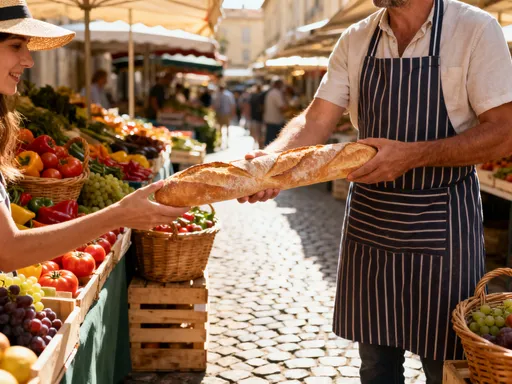
To enter the Quadrilatero district is to step into the living kitchen of Bologna. Nestled within the ancient market streets just west of Piazza Maggiore, this compact neighborhood pulses with activity from early morning until late afternoon. Here, generations-old shops display pyramids of fresh produce, hanging salumi, wheels of Parmigiano Reggiano, and baskets of porcini mushrooms in season. The air is thick with the mingled aromas of vinegar, garlic, and warm bread. This is not a curated food hall for tourists—it is where Bolognese families shop, negotiate, and connect.
Vendors in the Quadrilatero are not performers. They do not smile broadly for cameras or offer samples with rehearsed pitches. Instead, they engage in rapid-fire exchanges in the local dialect, bantering with regulars while weighing out prosciutto or trimming artichokes. A grandmother might spend ten minutes debating the ripeness of figs with the fruttivendolo, not because she doubts his expertise, but because the conversation itself is part of the ritual. These interactions are not transactions—they are relationships, built over years and expressed through shared attention to detail.
Many of the shops in this district have been run by the same families for decades. A butcher’s son takes over the counter where his father once stood, learning the precise angle at which to slice coppa for maximum tenderness. A cheesemonger inherits her mother’s knowledge of which wheels have aged just right, able to detect subtle differences in texture and aroma. These skills are not taught in manuals; they are passed down through touch, taste, and time.
For visitors willing to observe respectfully, the Quadrilatero offers a rare glimpse into cultural continuity. One can watch as a young woman buys sfoglia—fresh pasta sheets—from a nonna who rolls it by hand, then follows her to a nearby kitchen where it will become tagliatelle al ragù for Sunday lunch. There are no signs explaining the process, no audio guides—just the quiet dignity of tradition in motion. To witness this is to understand that in Bologna, food is not a product. It is a practice, a language, a way of being together.
Hands-On Heritage: Pasta-Making Beyond the Class
It is easy to find a pasta-making class in Bologna. Tourists line up for hour-long workshops where they learn to roll tagliatelle or shape tortellini under the guidance of a smiling instructor. These experiences can be enjoyable, even enlightening. But they are, by nature, simplified. The real heart of Bolognese pasta culture lies elsewhere—in kitchens where no cameras are allowed, where recipes are not written down, and where the act of making dough is as intimate as a family secret.
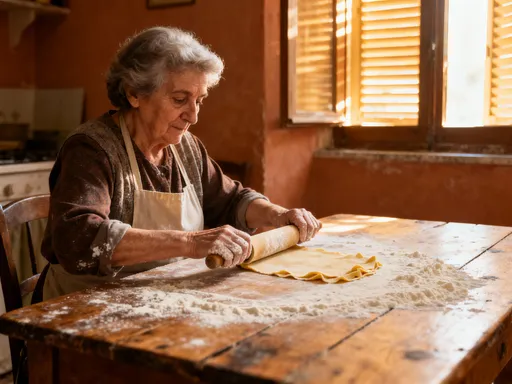
In Emilia-Romagna, sfogline—women who make fresh egg pasta by hand—have long been the keepers of culinary tradition. Their craft is not a hobby but a discipline, honed over decades. The ratio of eggs to flour, the thickness of the sheet, the pressure applied during rolling—each detail is precise, passed from mother to daughter without formal instruction. To be invited into such a kitchen is a rare honor, one extended only to those who have earned trust through time and presence.
I was fortunate to spend an afternoon with one such sfoglina, Maria, in her modest apartment near the Mercato di Mezzo. She did not offer a lesson. Instead, she worked in silence at first, cracking four eggs onto a mound of flour and drawing the edges inward with a fork. As the dough came together, she began to speak—of her childhood in the countryside, of learning to roll pasta at age six, of how her hands now ache but still move with instinct. She showed me how to press the rolling pin forward with the weight of the body, not the arms, and how to rotate the sheet a quarter-turn after each pass.
What struck me most was not the technique, but the reverence. This was not cooking as performance. It was cooking as devotion. When she finally cut the sheet into wide ribbons for tagliatelle, she did so with a long knife called a mattarello, moving in smooth, rhythmic strokes. “The pasta must be even,” she said. “Not for beauty. For how it cooks.” In Bologna, perfection is not aesthetic—it is functional, rooted in the belief that food should nourish, comfort, and bring people together. To participate, even briefly, in this tradition is to feel its weight and warmth.
Beyond the Plate: Theater, Music, and City Identity
Bologna’s culture cannot be measured in calories alone. While its cuisine draws global attention, the city’s creative spirit thrives in less edible forms. From underground music venues in repurposed factories to open-air theater in medieval cloisters, Bologna sustains a vibrant, participatory arts scene. This is a city where culture is not confined to museums or concert halls—it spills into the streets, into cafes, into conversations over wine.
The Teatro Comunale, Bologna’s historic opera house, offers world-class performances, but equally compelling are the grassroots initiatives that animate the city’s cultural life. In former industrial spaces like Link and Spazio 34, young musicians perform indie rock, jazz, and experimental soundscapes. These venues are unpretentious—concrete floors, dim lighting, folding chairs—but they buzz with energy and authenticity. Admission is often by donation, reflecting a commitment to accessibility over profit.
Street theater and political satire also have a strong presence. During festivals like the Festival di Teatro Civile, performers take over piazzas to address social issues—housing, immigration, environmental justice—through humor, music, and improvisation. These acts are not polished spectacles; they are raw, urgent, and deeply local. They reflect Bologna’s tradition of civic engagement and its belief that art should provoke as much as it entertains.
Music education is another pillar of the city’s cultural strength. The Conservatorio di Musica Giovan Battista Martini, one of Italy’s oldest, trains generations of composers and performers. But music is not reserved for the elite. In summer, free concerts are held under the porticoes, in parks, and even in church courtyards. A saxophonist might play Coltrane beneath the arches of Strada Maggiore; a string quartet might rehearse in a shaded courtyard. These moments are not staged for tourists—they happen because the city believes music belongs to everyone.
The Slow Shift: Tourism Pressures and Local Resistance
Like many beloved European cities, Bologna faces the challenges of growing tourism. Visitor numbers have risen steadily, drawn by its food, history, and relative affordability. While tourism brings economic benefits, it also strains the city’s delicate balance. In the historic center, rising rents have pushed out long-time residents and family-run shops, replaced in some areas by souvenir stores and short-term rentals. The very qualities that make Bologna special—its authenticity, intimacy, and community—are at risk of being diluted.
Yet Bologna is not passively accepting this transformation. Local initiatives are emerging to protect the city’s soul. Food cooperatives, such as Alta qualità, basso prezzo (High quality, low price), connect consumers directly with regional farmers, ensuring fair prices and sustainable practices. Neighborhood associations organize guided tours led by residents, offering insights that no professional guidebook can provide. These walks focus not on monuments, but on daily life—where to buy the best balsamic, which baker still uses a wood-fired oven, how to greet a shopkeeper properly.
Efforts to preserve the Bolognese dialect are also gaining momentum. Though Italian is the official language, the local dialect carries cultural nuances that risk being lost. Schools and cultural groups now offer workshops to teach younger generations, recognizing that language is more than communication—it is memory, identity, and belonging. Murals celebrating local heroes and historical moments appear on walls throughout the city, reinforcing a sense of pride and continuity.
The message from Bologna’s residents is clear: they do not reject tourism, but they demand respect. They want visitors to engage, not exploit. They welcome curiosity, but not commodification. For travelers, this means choosing osterie where the menu is in Italian, asking permission before photographing people, and supporting businesses owned by locals. It means understanding that Bologna is not a stage set—it is a home.
Traveling Deeper: How to Engage, Not Just Observe
Visiting Bologna with intention requires a shift in mindset. It means moving beyond checklists and Instagram moments toward presence and patience. The city reveals itself slowly, to those who are willing to listen. One way to begin is by learning a few phrases in the local dialect—not to impress, but to show respect. A simple “grazie” is fine, but “grazie de cuor” (thank you from the heart) carries a warmth that locals notice.
Timing matters. Arriving early at the market allows one to witness the morning rush, to see vendors setting up their stalls and families picking up ingredients for lunch. Attending local festivals, such as the Festa di San Petronio in October, offers a chance to experience community celebrations that are not staged for tourists. These events feature traditional music, processions, and shared meals, reflecting the city’s deep-rooted sense of togetherness.
Dining choices also shape the experience. Instead of crowded restaurants on Piazza Maggiore, seek out neighborhood osterie where the owner knows the customers by name. Order what is seasonal. Ask for the house wine. And never, under any circumstances, order a cappuccino after 11 a.m.—it is a small rule, but one that signals awareness of local customs. In Bologna, such details are not quirks; they are expressions of care and rhythm.
Most importantly, slow down. Sit at a café under the porticoes and watch the world pass. Accept an invitation to a family meal, even if the conversation is difficult to follow. Let the city unfold at its own pace. Real connection does not come from seeing more, but from being present—fully, quietly, humbly. Bologna does not give up its secrets to those in a hurry.
Bologna doesn’t hand out epiphanies. You earn them. Its culture isn’t displayed behind glass—it’s kneaded, argued, sung, and shared over shared tables. To experience it deeply is to stop being a spectator. This city teaches us that real travel isn’t about ticking boxes. It’s about being changed—quietly, completely—by the weight of history lived one day, one meal, one conversation at a time.