You Won’t Believe These Photo Spots at Bled’s Iconic Landmarks
If you’ve ever dreamed of capturing a fairytale scene in real life, Bled, Slovenia is where that dream comes true. I was blown away by how every angle of the island church, clifftop castle, and lakeside paths delivers a postcard-perfect shot. This isn’t just scenic—it’s next-level picturesque. In this piece, I’ll walk you through the most stunning vantage points that showcase Bled’s landmark buildings in their full glory. Trust me, your camera roll will thank you.
The Magic of Bled: Where Landmarks Meet Legend
Lake Bled is more than a destination; it is a living canvas painted by glaciers, shaped by centuries of culture, and guarded by architectural gems that seem lifted from a storybook. Nestled in the Julian Alps, this alpine lake’s emerald waters reflect not just the sky, but the soul of Slovenia. At its center, rising from the stillness, stands the Church of the Assumption on Bled Island, its 99-step staircase steeped in tradition and whispered wishes. Perched dramatically on a 130-meter cliff to the south, Bled Castle clings to rock, its origins tracing back over a thousand years to the 11th century. These are not merely tourist attractions—they are cultural anchors, symbols of resilience, faith, and natural harmony.
Photographing these landmarks means more than snapping a beautiful image. It’s about preserving a moment of connection—between viewer and place, past and present. The island church has long been associated with romance and ritual; legend says a woman who rings its bell will be blessed with renewed love. Meanwhile, Bled Castle has served as a customs post, fortress, and noble residence, evolving through time while maintaining its commanding presence. Each stone, window, and weathered beam tells a story. For photographers, especially those who appreciate depth and meaning behind the lens, Bled offers more than pretty views—it offers narrative.
What makes Bled truly special is how seamlessly nature and human history coexist. The lake itself was formed during the last Ice Age, and today it remains a pristine body of water, protected by national conservation efforts. The surrounding forested hills, walking trails, and seasonal transformations—from summer’s lush greenery to autumn’s golden hues and winter’s soft snow blankets—create ever-changing backdrops. Whether you’re an amateur with a smartphone or a seasoned traveler with professional gear, understanding the cultural significance of what you're photographing deepens the experience. Capturing Bled well means respecting its spirit, not just its scenery.
Golden Hour at Bled Castle: A Photographer’s Dream
For many, the most iconic silhouette in Bled is that of the castle etched against the sky, especially during golden hour. That magical window shortly after sunrise or before sunset bathes the ancient fortress in warm, soft light, transforming its gray stone into a glowing amber crown. The contrast between shadow and illumination highlights the castle’s textures—the rough-hewn walls, arched windows, and slate rooftops—giving photos a dramatic depth that midday sun simply cannot match. If you’re aiming for standout images, timing is everything.
The best vantage point for photographing Bled Castle without obstructions lies along the southern lakeshore path, near the public swimming area and just past the mini-golf course. From here, the full profile of the castle appears elevated above the treetops, framed by the lake’s mirror-like surface. Arriving 45 minutes before sunrise ensures you’ll beat the crowds and catch the first rays creeping across the cliff face. A tripod is highly recommended for long exposures, especially in low light, allowing for crisp details even when shutter speeds slow down. A telephoto lens (70–200mm) works wonders for isolating architectural features, while a wide-angle lens (16–35mm) captures the grandeur of the entire scene, including reflections in the water.
While the castle is accessible to visitors, shooting from outside offers uncluttered compositions. Inside the castle grounds, the panoramic terrace provides a reverse perspective—looking back across the lake toward the island and the town of Bled. This is an excellent spot for wide-angle shots, particularly during late afternoon when the sun lights up the island and casts long shadows across the water. Be mindful of railings and other visitors when composing your frame. Early June through mid-September offers the longest daylight hours and highest chance of clear skies, though spring and fall bring fewer tourists and softer light. Regardless of season, checking the local weather forecast the night before can make the difference between a foggy disappointment and a radiant capture.
Shooting the Island Church: Reflections, Boats, and Timing
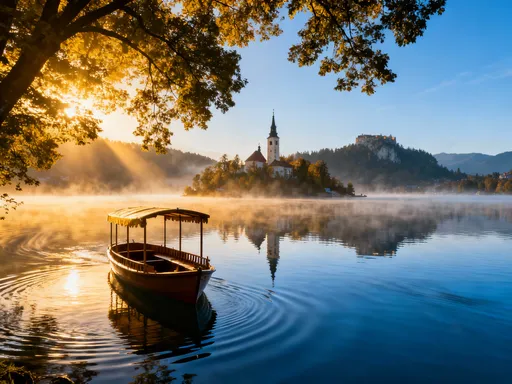
No image of Bled is complete without the Church of the Assumption standing proudly on its tiny island. Its Baroque bell tower, white façade, and red-tiled roof make it one of the most photographed churches in Europe. But to photograph it well requires more than pointing and shooting. The key lies in reflection, timing, and composition. On calm mornings, when the lake is undisturbed, the church doubles in visual impact—its perfect mirror image stretching beneath the surface like a second world. This symmetry is what turns a good photo into a breathtaking one.
The ideal time to capture this reflection is between 5:30 and 7:00 a.m., depending on the season. During these quiet hours, the lake is often still, mist curls gently above the water, and the first light filters through the trees. To include the island in its fullest context, position yourself along the eastern or western stretches of the lakeshore promenade. The area near the Bled Thermal Hotel offers a slightly elevated view, while the path behind the Bled Island Jetty provides a lower, more intimate perspective. Including a traditional pletna boat in the foreground can add narrative depth—these hand-rowed wooden boats have served the island for centuries and are themselves a symbol of local heritage.
Boat schedules are essential to plan around. Pletna boats begin operating around 7:00 a.m., and their movement can disrupt reflections. For uninterrupted water, aim to shoot before the first boat departs. If you wish to photograph from the island itself, arrive early or book a private rowing in advance. Once on the island, focus on vertical compositions that emphasize the 99 steps leading upward, with the church doors at the top. The surrounding trees, wrought-iron railings, and carved wooden confessional booth add character. Remember, drones are strictly prohibited over the island and lake without special permission, and flash photography is discouraged inside the church to protect the interior and maintain reverence. Respectful photography ensures the site remains beautiful for generations to come.
Vantage Point Hike: The Osojnica Trail Experience
For a truly unforgettable perspective, the Osojnica viewpoint hike delivers one of the most rewarding experiences in the region. This moderately easy trail begins near the northern end of Lake Bled, just past the Bled Aquapark, and ascends through a shaded pine forest before opening into a wide clearing that frames both Bled Castle and the island church in a single, sweeping vista. It’s the kind of view that stops you in your tracks—a panoramic postcard come to life. The hike takes approximately 30 to 45 minutes one way, depending on pace, and covers about 2.5 kilometers with a steady but manageable incline.
Wear sturdy walking shoes, as some sections are rocky and can become slippery after rain. The trail is well-marked with yellow signs and is suitable for most fitness levels, including older adults and families. Along the way, small benches offer rest spots and partial views, but the real reward waits at the summit. The viewpoint faces south, perfectly aligned with the lake, making it ideal for sunrise photography. As the sun rises behind you, it illuminates the castle and bathes the island in golden light, creating a dynamic interplay of shadow and warmth. A wide-angle lens (16–35mm) is ideal here, allowing you to capture the entire scene without losing detail.
Because the trail sees fewer visitors than the main lakeside paths, you’ll often find peace and solitude, especially on weekday mornings. This makes Osojnica a favorite among photographers seeking crowd-free compositions. Bring a light backpack with water, a snack, and extra layers—temperatures can be cooler at elevation, even in summer. Late spring and early autumn offer the most comfortable hiking conditions, with blooming wildflowers or colorful foliage enhancing the scenery. While the trail is safe and well-maintained, always stay on marked paths to protect the local ecosystem. The Osojnica viewpoint isn’t just a photo spot—it’s a moment of quiet awe, a reminder of how nature and architecture can coexist in perfect balance.
Hidden Corners Around the Lake: Less Crowd, More Character
While the main promenade draws the majority of visitors, some of the most evocative photos come from quieter, lesser-known spots around Lake Bled. These hidden corners offer intimacy, originality, and a chance to see the landmarks through a fresh lens. Just west of the island jetty, a small wooden footbridge extends into the reeds—a favorite among locals and observant photographers. From here, the island appears slightly off-center, framed by swaying reeds and lily pads, creating a more artistic, painterly composition. Early evening, when golden light skims the water, is particularly magical.
Another underused location is the northern lakeshore path, which runs from the Aquapark toward the village of Zaka. This stretch is flanked by tall trees and opens into small clearings where the castle appears partially veiled by branches—an effect that adds mystery and depth. Autumn is especially beautiful here, as fallen leaves float on the surface and the surrounding hills turn amber and crimson. A telephoto lens can isolate the castle’s tower through the foliage, creating a sense of discovery. Similarly, Bled Park, located near the castle access road, offers shaded pathways, ornamental bridges, and peaceful benches. It’s easy to overlook, but a morning walk through the park can yield delicate shots of dew-covered spiderwebs, birds taking flight, or sunlight filtering through the canopy.
Photographing small details often tells a richer story than wide vistas alone. A swan gliding past the island, its reflection trailing behind; a single pletna boat moored at dusk; a child feeding ducks near the shore—these moments add life and emotion to your collection. Visiting during shoulder hours—early morning or late afternoon—ensures fewer people and better lighting. Weekdays are noticeably quieter than weekends. By exploring beyond the obvious, you not only avoid crowds but also develop a more personal connection to the place. These quieter spots invite stillness, observation, and a deeper appreciation for the everyday beauty that defines Bled.
Architectural Details: From Castle Walls to Church Bells
While wide-angle shots capture Bled’s grandeur, close-up photography reveals the soul of its landmarks. At Bled Castle, the details are rich with history. The outer walls, built from local stone, show centuries of weathering—cracks, moss growth, and uneven mortar lines that speak of endurance. The main entrance features a heavy wooden door reinforced with iron bands, its surface worn smooth in places by countless hands. Above it, the coat of arms of the bishops of Brixen, who once ruled the castle, remains carved in stone. These elements, often overlooked, make powerful subjects when framed tightly.
Inside the castle complex, the wine cellar and printing press museum offer dimly lit interiors perfect for moody, textured shots. Use natural light from high windows to highlight the grain of wooden barrels or the intricate mechanisms of old printing tools. A macro lens allows you to capture fine details—rust on hinges, engravings on stone tablets, or the texture of ancient fresco fragments. Similarly, the panoramic windows in the restaurant area provide framed views of the lake, creating a natural ‘photo within a photo’ opportunity.
On the island, the church’s bell tower dominates the skyline, but closer inspection reveals its charm. The symmetry of its arched belfry, the aged copper roof, and the hand-forged iron bell ropes all contribute to its timeless appeal. The main door, painted white with black iron fittings, stands at the top of the famous 99 steps. Shooting upward from the base of the stairs emphasizes both the climb and the spiritual ascent it represents. Inside the church, the altar, stained glass, and wooden pews are beautifully preserved. While flash is not allowed, natural light from the side windows often suffices for respectful interior shots. These architectural details don’t just fill memory cards—they deepen understanding, turning photographs into lasting memories of craftsmanship and devotion.
Photography Tips and Responsible Travel
Capturing Bled’s beauty responsibly is just as important as capturing it beautifully. A few practical tips can elevate your photography while preserving the site’s integrity. First, use a polarizing filter to reduce glare on the water and enhance sky contrast—this simple tool makes reflections clearer and colors more vibrant. Second, avoid using flash near historical structures or in sacred spaces, as it can damage delicate surfaces and disturb other visitors. Third, be mindful of tripods in crowded areas; while useful, they should not block pathways or obstruct views for others.
Respect local guidelines: drones require official permission and are generally not allowed over Lake Bled or its landmarks. Stick to designated paths, especially on hikes like Osojnica, to protect plant life and prevent erosion. Never leave trash behind, and if you’re traveling with family, teach children to appreciate the site’s fragility. Great photography isn’t about getting the perfect shot at any cost—it’s about patience, observation, and reverence for the place you’re documenting.
Finally, remember that Bled’s charm lies not just in its postcard views, but in its quiet moments—the hush of morning mist, the chime of the island bell, the way sunlight dances on the water. Take time to put the camera down and simply be present. When you return home, your photos will carry not just images, but the feeling of having been somewhere truly special. By combining technical care with mindful travel, you honor both the craft of photography and the enduring spirit of Bled. Let your lens reflect not just beauty, but respect.