From Screen Time Guilt to Family Connection: How Recording My Workday Gave Us Back Dinner
You know that sinking feeling—your child asks, “What did you do today?” and you can’t remember because your screen swallowed the hours. I felt it too, until I started recording my work sessions. Not for surveillance, but as a bridge. Now, those clips spark conversations, teach moments, and unexpected joy. This isn’t about productivity hacks—it’s how a simple tech habit quietly reshaped our family rhythm, one shared story at a time. It started small, almost by accident, but it changed everything. The guilt around screen time faded, and in its place came something I hadn’t expected: real connection, laughter, and a new kind of closeness around the dinner table.
The Moment Everything Shifted: When My Son Saw My Screen
I used to dread the end of the workday. Not because I was tired—though I often was—but because of the questions that followed. “Mommy, what did you do today?” My son would ask, eyes wide, genuinely curious. And I’d freeze. What could I say? “I answered emails”? “I had a Zoom call”? It all sounded so flat, so distant. I’d mumble something vague and change the subject, guilt settling in my chest like a stone. I was there with him, physically, but mentally I was still scrolling through my to-do list, replaying meetings, trying to catch up. I wasn’t really present, and deep down, I knew it.
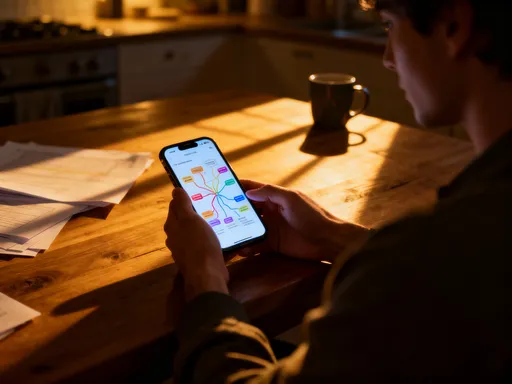
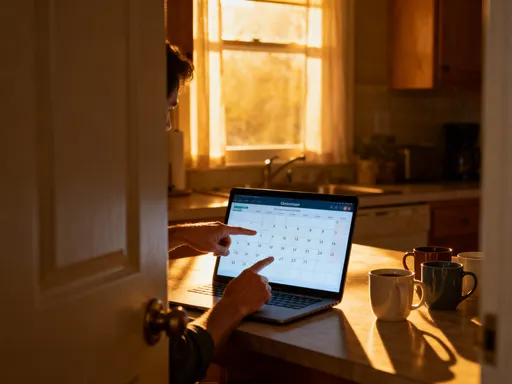
Then one evening, on a whim, I showed him a 60-second clip I’d recorded earlier that day. It was nothing special—just me narrating how I’d rearranged a project timeline in a shared document. I pointed at the screen, explained the colors, showed how dragging one box changed the whole plan. “Watch this,” I said, pressing play. He leaned in, eyes fixed. And then it happened. “You draw on the computer like me!” he exclaimed, pointing at the screen with a grin. In that moment, something cracked open. My work—something I’d always thought was too boring or too complicated for him to understand—suddenly made sense to him. Not because of the content, but because he saw *me* in it. He didn’t need details. He needed to see my hands moving, hear my voice explaining, watch me solve a tiny problem. He needed to feel included.
That innocent comment rewired something in me. I realized I’d been hiding behind my screen, treating my work like a secret world that had no place in our family life. But my son wasn’t asking for a corporate report. He was asking to know me. And for the first time, I gave him a window instead of a wall. That clip didn’t just show him what I did—it showed him that I *saw* him, too. That I wanted him to be part of my day, just like I was part of his. From that night on, I stopped dreading the question. I started looking forward to it.
Screen Time Wasn’t the Enemy—Silence Was
We’ve all heard the warnings: too much screen time pulls families apart. Experts say it. Articles repeat it. We nod along, guilty, because we’ve all been there—sitting on the couch with everyone staring at their own device, silence heavy in the air. I believed it too. I thought the problem was the screen. But after that first clip, I started paying attention. And what I noticed surprised me. The real issue wasn’t the screen itself. It was what happened around it—the silence, the lack of explanation, the invisible barrier it created even when I wasn’t using it.
My kids didn’t resent the laptop. They resented not knowing what was happening behind it. To them, I was sitting right there, but I was gone. My fingers flew across the keyboard, my eyes darted across the screen, but I wasn’t talking, laughing, or engaging. I was a ghost in my own home. The screen wasn’t the enemy—my silence was. By not sharing, I was making my work feel like a secret, like something that didn’t belong in our family world. And that made my presence feel conditional: “Wait until I’m done.” “Not now.” “Mommy’s working.”
Recording small moments changed that. A 90-second clip of me fixing a spreadsheet wasn’t just a peek into my job—it was an invitation. “Look,” I’d say, “I had to fix this broken chart. It was like a puzzle!” Suddenly, my work wasn’t abstract. It was relatable. My daughter started calling my clips “Mommy’s work movies.” She’d ask, “Can we watch your movie tonight?” And when we did, she’d giggle at my voice, point at the screen, ask questions. “Why is that box red?” “Did you win the puzzle?” The screen wasn’t pulling us apart anymore. It was pulling us closer. The technology didn’t create distance—it filled a gap I hadn’t even realized was there.
How a Simple Recording Routine Built Unexpected Bridges
I didn’t start with a plan. No grand vision, no detailed system. I just began recording short clips at the end of my work blocks—five, maybe ten minutes, nothing polished. Just me, talking casually into the microphone, walking through what I’d just done. “Okay, so I finished the budget report. Took a few tries, but I figured out the formula.” I’d save it with a fun title like “Mom’s Coding Adventure” or “The Case of the Missing Data” and drop it into a folder labeled “Work Movies.”
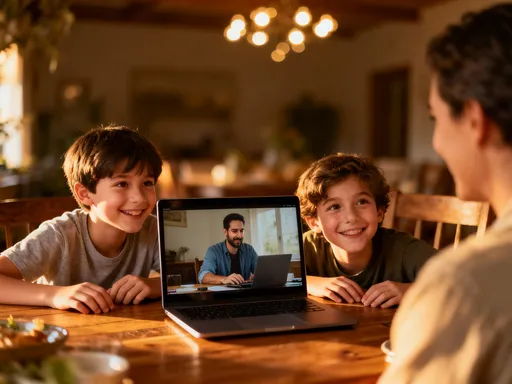
Later, during dinner or before bedtime, I’d pull one up. At first, I worried they’d be bored. But the opposite happened. My daughter started asking for them like they were cartoons. “Can we watch Mommy’s work movie?” she’d say, climbing onto my lap. And when we played it, something magical happened. They didn’t just watch—they *participated*. My son would shout, “Click there!” as if he could help me from the past. My daughter started drawing her own “charts” on paper, lining up stickers in rows. “I’m going to make a chart like Mom!” she announced proudly one afternoon.
These clips became part of our rhythm. They weren’t replacing playtime or storytime—they were enriching them. Technology didn’t steal our moments; it gave us new ones. I wasn’t showing off. I was sharing. And in doing so, I was giving my kids a language for the invisible parts of my day. They began to understand that work wasn’t just “being busy”—it was thinking, solving, creating. And when they saw me struggle, restart, or laugh at a mistake, they didn’t see failure. They saw *me*. Real, trying, learning. That authenticity became a bridge. One clip at a time, we were rebuilding connection.
Turning Work Stories into Teaching Moments (Without Lectures)
Here’s what I didn’t expect: those little recordings started becoming quiet teaching tools. Not in a formal way—no quizzes, no lessons titled “Today’s Value: Perseverance.” Nothing like that. But naturally, organically, my kids began drawing parallels between my work and their world. A clip of me re-recording a failed presentation became a conversation about starting over. “You messed up?” my son asked, wide-eyed. “Yeah,” I said. “But I tried again. And it was better the second time.” He nodded slowly. “Me too. I had to redraw my dinosaur drawing three times.”
That moment wasn’t staged. It wasn’t a parenting win I’d planned. It just happened—because he’d *seen* me be imperfect. He’d watched me pause, sigh, restart. And in that vulnerability, he found permission to be imperfect too. There was no lecture, no “Let me teach you about resilience.” Just a shared moment, a mirrored experience. And that made all the difference.
Another time, I shared a snippet of a team meeting where someone interrupted me. Later, at dinner, my daughter said, “You didn’t get to finish. That’s not fair.” I smiled. “No, it wasn’t. But I waited, and then I said my part.” She thought for a second. “Like when Leo won’t let me talk at circle time?” Exactly. We talked about how hard it is to wait, how important it is to speak up, and how listening matters too. These weren’t lessons I could’ve forced. They emerged because she’d *witnessed* me living them.
The beauty of this approach is that it doesn’t feel like teaching. It feels like sharing. And when kids learn through observation, not instruction, the lessons stick. They don’t hear “You should be resilient.” They see *resilience*. They don’t get a speech about problem-solving. They watch it unfold in real time. And because it’s wrapped in something familiar—Mom’s voice, Mom’s screen, Mom’s little work world—it feels safe, relatable, real.
The Ripple Effect: Calmer Evenings, Deeper Conversations
One of the most surprising changes was how our evenings transformed. Before, the transition from work to family time was tense. I’d be trying to wrap up emails, my kids would be vying for attention, and someone always ended up frustrated. My son would knock on my office door every ten minutes. “Mommy, are you done?” “Mommy, can I show you my drawing?” “Mommy, I’m hungry.” I’d snap, “Just a minute,” and instantly feel guilty.
Now, things are different. When I’m in a call or finishing a task, I can say, “I’m almost done. After this, we’ll watch my work movie.” That simple promise changes everything. He knows his turn is coming. He doesn’t have to fight for my attention because he trusts that I’ll give it to him—fully, without distraction. The competition for attention fades because the connection is already building.
And when we watch the clip, something shifts. He’s not just passively listening. He’s engaged, asking questions, making connections. “Why did you use blue?” “Did your boss like it?” “Can I make one too?” These aren’t small talk. They’re real conversations—deeper than “How was school?” because they’re rooted in something concrete. He’s not just hearing about my day. He’s *experiencing* it. And that makes him feel included, valued, part of the story.
The change wasn’t dramatic. No big announcements, no overnight transformation. But over time, the weight lifted. The guilt around screen time faded because the screen was no longer a barrier—it was a bridge. I didn’t have to choose between being a present parent and doing meaningful work. I could be both. And my kids? They stopped seeing my laptop as the thing that took me away. They started seeing it as the thing that brought me closer.
Practical Tips: How to Start Small (No Editing Skills Needed)
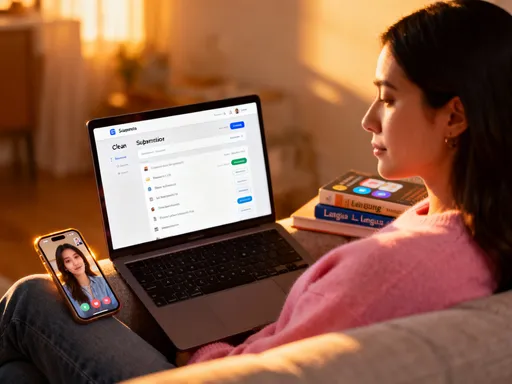
You might be thinking, “This sounds nice, but I’m not tech-savvy. I don’t have time to edit videos.” Let me tell you: you don’t need any of that. I use the screen recorder that comes built into my laptop—no downloads, no cost, no learning curve. When I finish a task, I press record, talk for a minute or two, stop, and save. That’s it. No fancy edits, no filters, no scripts.
Start small. Pick one moment a day—finishing a report, solving a problem, even a funny mistake. Talk casually, like you’re explaining it to a friend. “Okay, so I had to fix this chart. It kept breaking. But I figured it out!” Save the file with a fun name—“Mom’s Spreadsheet Rescue,” “The Great Email Fix,” “When the Computer Glitched.” Keep it short—under two minutes is perfect.
Share it at a natural moment—dinner, before bed, during snack time. Let your child react. Don’t force it. If they laugh, laugh with them. If they ask questions, answer them. If they want to watch it again, play it again. The goal isn’t perfection. It’s presence. It’s showing up, not just physically, but emotionally.
And if you miss a day? No problem. This isn’t about consistency. It’s about connection. Even one clip a week can open the door. You don’t need to record every project or meeting. Just pick the moments that feel real, human, relatable. The ones where you’re trying, learning, laughing. Those are the moments that matter.
Not Just for Parents: Reimagining Work-Life Integration
This practice isn’t just for moms or dads with young kids. I’ve shared this idea with friends, and it’s surprised me how many different ways it’s been adapted. One woman started sending short clips to her aging parents. “They never understood what I do in tech,” she told me. “Now I send them a quick video: ‘This is how I built the website.’ They watch it together, point at the screen, ask their neighbor, ‘Can you believe she does this?’ It makes them proud.”
Another friend uses it with her partner. “We both work from home,” she said. “It’s easy to feel like roommates. But when I share a clip of my day, it’s like saying, ‘This is where I was, even when I was quiet.’ He watches it, asks questions, and suddenly, we’re not just sharing a space—we’re sharing a life.”
For remote workers, freelancers, anyone whose labor happens behind closed screens, this is powerful. It makes invisible work visible. It turns isolated effort into shared experience. In a world where work bleeds into life, we often try to fix that by creating stricter boundaries—“No phones at dinner,” “Work hours only.” But what if the solution isn’t separation? What if it’s integration? What if we don’t need to do less work at home—but instead, share more of it?
That’s the heart of this practice. It’s not about screen time. It’s about storytelling. It’s about saying, “This is me. This is what I do. This is how I spend my time. And I want you to be part of it.” It’s not about showing off. It’s about showing up. And in a world that often makes us feel fragmented—torn between roles, responsibilities, identities—this small act brings wholeness. It reminds us that we don’t have to hide our work to be present. We can bring it into the light, one clip at a time.