From Mood Swings to Mastering Myself: How a Simple App Brought Calm to My Chaotic Days
Life moves fast, and emotions often tag along uninvited. I used to react to stress with frustration, snap at my family, and carry anxiety into every task. But everything shifted when I started using a mood tracking app—not as a clinical tool, but as a creative companion. It didn’t judge me; it helped me see patterns, pause before reacting, and reclaim control. This is the quiet change that made my life feel lighter, clearer, and more intentional. If you’ve ever felt like your emotions were running the show while you just watched from the sidelines, you’re not alone—and this might be exactly what you need to hear.
The Breaking Point: When Emotions Overwhelmed Routine
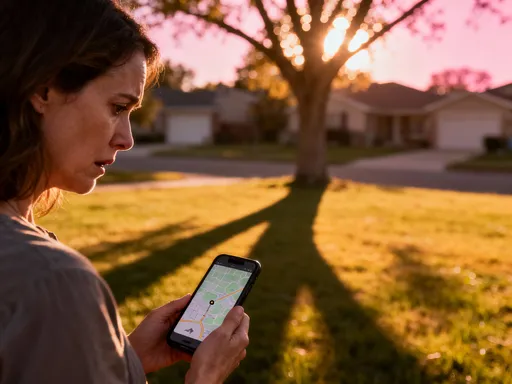
It started with spilled coffee. A normal Tuesday morning—kids scrambling for backpacks, toast burning, my phone buzzing with unread messages. Then, the mug slipped. Brown liquid spread across the counter, dripping onto the floor. And instead of sighing and grabbing a towel, I froze. My chest tightened. I felt tears well up, not because of the mess, but because it was just one more thing in a week full of little things piling up. I snapped at my daughter for humming too loudly, then immediately regretted it. That moment wasn’t about coffee. It was about feeling overwhelmed, unseen, and emotionally raw.
I love my life. I really do. But somewhere between school drop-offs, grocery runs, work deadlines, and trying to be present for my family, I’d lost touch with myself. I was reactive—irritable when tired, anxious when busy, and guilty when I wanted time alone. I felt like I was juggling too many balls and dropping them all in silence. My emotions weren’t just part of the day—they were dictating it. I didn’t need another to-do list. I needed to understand what was happening inside me.
That’s when my friend Sarah mentioned a mood tracking app she’d been using. 'It’s not like therapy,' she said, 'but it helps me notice things I’d otherwise miss.' I was skeptical. The idea of logging my moods every day sounded tedious, maybe even a little self-indulgent. But I was tired of feeling out of control. So, I downloaded it—not as a fix, but as an experiment. No pressure, no expectations. Just curiosity. And honestly, that small shift—doing it for me, not because I should—made all the difference.
Beyond the Graph: Treating the App as a Creative Journal, Not a Diagnostic Tool
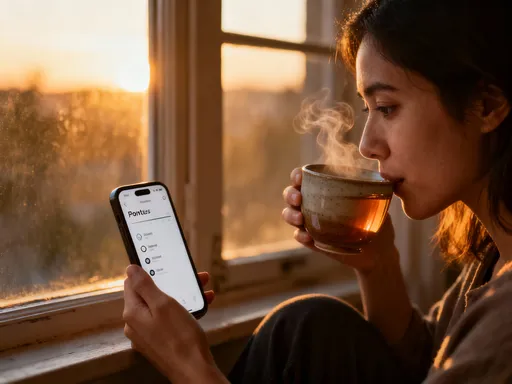
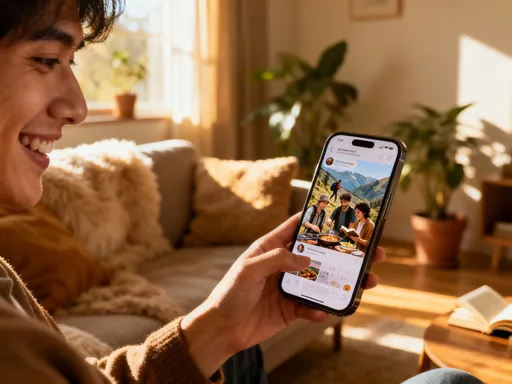
At first, I treated the app like a report card. 'Feeling anxious—2/5.' 'Happy—4/10.' It felt cold, like I was grading myself. But after a few days, I realized I wasn’t connecting with it. The numbers didn’t capture the full story. So I started playing with it. I began adding notes—short phrases like 'felt overwhelmed after phone call with school' or 'sunlight made me smile today.' I used the color palette feature not just to match moods, but to express them. A swirl of blue for sadness. A burst of yellow for sudden joy. I even recorded voice memos when words felt too heavy—just a quick 'I’m drained' or 'this sunset took my breath away.'
That’s when it changed. The app stopped being a tracker and started feeling like a digital journal—one that listened without judgment. I wasn’t trying to 'fix' anything. I was just showing up. And the more creative I got with it, the more natural it felt to open it each day. Some days, I skipped entries. And that was okay. There was no guilt, no red streaks marking missed days. Just space to be honest. I realized I wasn’t tracking moods to achieve perfection. I was doing it to understand myself better.
This shift in mindset was everything. Instead of thinking, 'Why am I still stressed?' I started asking, 'What’s making me feel this way?' The app became less about data and more about dialogue—with myself. And because it felt like self-expression, not self-surveillance, I stuck with it. That consistency, gentle and unforced, was what eventually led to real insight.
Patterns in Plain Sight: What My Mood Data Revealed About My Habits
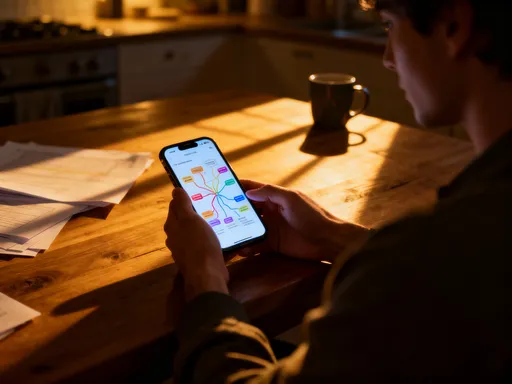
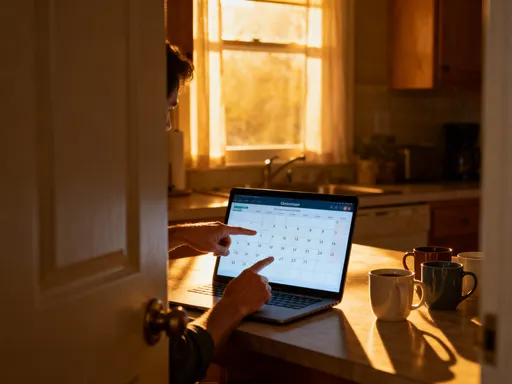
After about three weeks, I decided to look back. Not to analyze every entry, but just to scroll through. And something surprising happened—I started noticing rhythms. A dip in energy every Monday around 3 PM. A spike in calm on mornings I walked the dog before breakfast. Irritability after skipping lunch. And a strange but consistent uplift in mood on days I called my sister.
One week stood out. I’d felt particularly off—snappy, tired, unfocused. When I reviewed my entries, I saw a pattern: every afternoon, my mood dropped. But it wasn’t random. It happened on days when I’d skipped water after lunch and spent hours glued to my screen, answering emails. On days I drank enough water and stepped outside—even just for five minutes—the dip was milder, or didn’t happen at all. The app didn’t tell me this. I discovered it by paying attention.
That realization hit me like a quiet lightning bolt. My afternoons weren’t ruined by bad luck or parenting stress. They were shaped by simple, fixable habits. The app didn’t offer solutions. It didn’t send me a notification saying, 'Drink more water!' It just held up a mirror. And in that reflection, I saw a path forward. I didn’t need a dramatic lifestyle overhaul. I needed small, intentional choices. And for the first time in a long while, I felt like I had agency.
Small Shifts, Big Changes: Using Insights to Design a Kinder Daily Rhythm
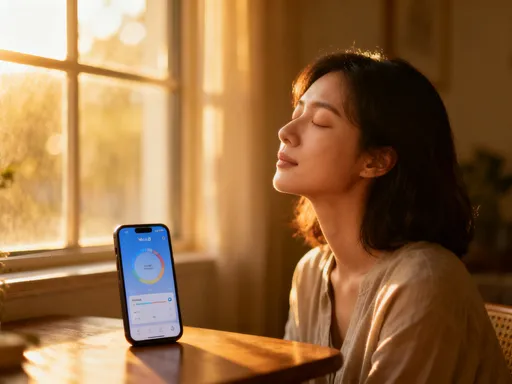
So I started experimenting. On Monday, I set a reminder to drink a full glass of water at 1 PM. I also scheduled a five-minute breathing break at 2:30—just me, closed eyes, and a simple breath-in, breath-out rhythm. The first few days, I forgot. But gradually, it became routine. And guess what? My 3 PM crash softened. Not gone, but manageable. I didn’t feel like I was fighting myself anymore.
I applied the same approach elsewhere. I noticed I felt calmer on mornings when I wasn’t checking emails first thing. So I started protecting my first hour—no phone, just coffee, quiet, and maybe a few minutes of stretching. Some days I slipped, but I didn’t beat myself up. I just returned to the intention. The app became my feedback loop: I’d try a change, log how I felt, and adjust. It wasn’t about perfection. It was about learning what worked for me.
Another shift came with food. I realized I was often hangry—irritable because I was hungry—but didn’t recognize it in the moment. So I started keeping healthy snacks nearby: almonds, fruit, yogurt. When I felt my mood dipping, I’d ask, 'Have I eaten recently?' More than once, a quick snack was all it took to reset my emotional tone. These weren’t groundbreaking discoveries, but they were mine. And because I’d uncovered them myself, they felt more powerful than any advice from a blog or book.
The beauty of this process was its simplicity. I wasn’t adding more to my plate. I was rearranging what was already there. And over time, these small shifts built a kinder, more sustainable rhythm—one that honored my energy, my needs, and my emotions.
Family Ripples: How My Emotional Clarity Improved Our Home Life
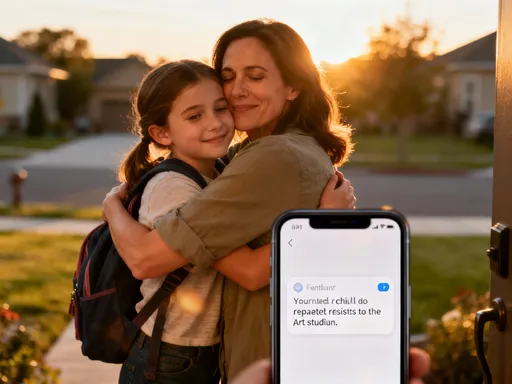
Here’s the part I didn’t expect: my kids noticed the change. Not because I announced it, but because they felt it. One afternoon, my son spilled juice on the couch—again. In the past, I might have sighed loudly, snapped, 'Why can’t you be more careful?' But this time, I paused. I took a breath. And I said, 'It’s okay. Let’s clean it up together.'
That pause wasn’t magic. It was practice. Earlier that day, I’d checked the app and noticed my stress level was already high—tense shoulders, racing thoughts. I’d logged it, acknowledged it, and taken a short walk. Because I’d named my stress, I didn’t let it leak onto my family. In that moment, I wasn’t reacting. I was choosing.
My daughter even said, 'Mom, you seem happier lately.' I didn’t feel like I was doing anything extraordinary. But I realized that emotional clarity isn’t just personal—it’s relational. When I’m grounded, I’m more patient, more present, more able to listen. My husband noticed too. We started having deeper conversations, not just about chores and schedules, but about how we were really feeling. The app didn’t fix my relationships. But by helping me show up more fully, it created space for connection to grow.
And here’s the truth: we don’t have to be perfect parents or partners to make a difference. We just have to be aware. When we manage our own emotions, we give our families a gift—the gift of calm, of safety, of being seen without fear of explosion. That’s not small. That’s everything.
Creativity Reborn: Making Space for Ideas When I Wasn’t Fighting Myself
For years, I told myself I wasn’t creative. 'I’m too busy,' I’d say. 'I don’t have time to write or draw.' But the truth was, I didn’t have space. My mind was cluttered with to-do lists, worries, and emotional noise. There was no room for inspiration.
Then, something shifted. As my inner world quieted, ideas started to return. Not in a flood, but in gentle whispers. One morning, I doodled in the margin of my planner—a little sun, a flower. The next day, I wrote a short paragraph about a memory from childhood. Then, I started a journal—not a formal one, just pages of thoughts, dreams, and random observations.
I even began planning a project I’d put off for years: a small garden in the backyard. Not because I suddenly had more time, but because I had more mental bandwidth. When I wasn’t constantly managing emotional chaos, my mind had room to dream again. The app didn’t spark these ideas. But by helping me create inner peace, it made space for them to grow.
That’s when I realized: creativity isn’t just about art or writing. It’s about seeing possibilities. It’s about believing that change is possible, even in small ways. And when we’re not at war with ourselves, that belief returns. We start to imagine—what if I tried that class? What if I reached out to that friend? What if I gave myself permission to want more?
A Lifelong Companion: Why I Keep Coming Back Without Pressure
I don’t use the app every day anymore. And that’s okay. There are weeks when I forget. Others when I dive back in during stressful times. But it’s no longer a tool I rely on to fix myself. It’s a friend I return to when I need clarity. When life feels off-rhythm, I open it, log a few entries, and within days, I start to see patterns again. It’s like having a compass I can check whenever I feel lost.
What I’ve learned is that emotional awareness isn’t a destination. It’s a practice. And like any practice—yoga, journaling, cooking—it gets easier with time. The app didn’t change me overnight. But it gave me a way to show up for myself, to listen, to adjust. It taught me that small insights lead to big shifts. That self-compassion is more powerful than self-criticism. And that understanding my emotions isn’t selfish—it’s essential.
If you’re feeling overwhelmed, know this: you don’t need a perfect system. You don’t need to track every mood or analyze every data point. You just need a starting point. Maybe it’s an app. Maybe it’s a notebook. Maybe it’s just a daily pause to ask, 'How am I really feeling?' The tool doesn’t matter as much as the intention behind it.
Because here’s the real gift: when we pay attention to our inner world, we don’t just survive our days. We begin to shape them. We become the authors of our lives, not just the characters. And that—more than any app, any chart, any color-coded graph—is the truest form of empowerment. You’re not broken. You’re becoming. And every small step you take toward understanding yourself is a victory worth celebrating.